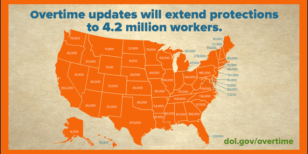
 Many employers have been wrestling with plans to comply with new U.S. Department of Labor (DOL) overtime rules since last May. That’s when the rules were finalized, with a December 1 compliance deadline. Those new rules included raising the minimum salary overtime exemption to $913 per week from $455. A little more than a week before the deadline for the rules was to take effect, a federal court has issued an injunction, at least temporarily blocking implementation of the changes.
In its decision, the court stated it believes the DOL exceeded its authority in promulgating the rule. In addition, the court said the DOL failed to follow Congress’s intent, which was to reexamine the duties test of the overtime rules, and not to focus solely on the salary level, as the final rules do.
The DOL’s initial response was to state that it “strongly disagrees” with the ruling, and is “currently considering all of our legal options.” A couple of short-term legal scenarios remain possible: The U.S. District Court for the Eastern District of Texas, which issued the ruling, could drop its temporary injunction.
Read More
 The nation’s economy is still on a strong upward trajectory, according to the latest monthly report from the Department of Labor, which showed an increase of 211,000 jobs for the month of April. Unemployment fell to 4.4 percent, its lowest level since May 2007.


 Dispatches From The Front