Justice Department Files Antitrust Lawsuit Against Visa for Monopolizing Debit Markets | Small Business Trends

The U.S. Department of Justice has filed a civil antitrust lawsuit against Visa, accusing the company of monopolizing debit network markets in violation of Sections 1 and 2 of the Sherman Act. The complaint, filed in the U.S. District Court for the Southern District of New York, alleges that Visa’s dominance in the debit network markets has allowed it to maintain a monopoly through exclusionary and anticompetitive conduct, undermining choice and innovation in payment systems.

According to the complaint, Visa controls over 60% of debit transactions in the United States, generating more than $7 billion in fees annually from processing these transactions. The Justice Department claims Visa illegally uses its dominance to stifle competition by imposing restrictive agreements on merchants and banks, penalizing them for using alternative debit networks. These practices allegedly protect Visa’s market position and prevent the growth of smaller, lower-priced competitors.

“We allege that Visa has unlawfully amassed the power to extract fees that far exceed what it could charge in a competitive market,” said Attorney General Merrick B. Garland. “Merchants and banks pass along those costs to consumers, either by raising prices or reducing quality or service.  As a result, Visa’s unlawful conduct affects not just the price of one thing – but the price of nearly everything.”
Read More

Sprint, T-Mobile merger ‘unlikely’ to be approved by DOJ: report | Mashable

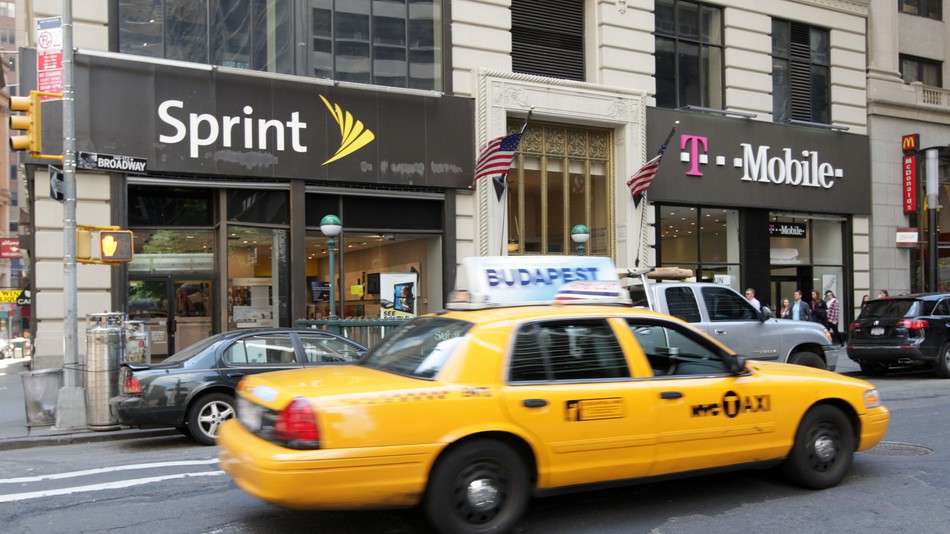
Things aren’t looking good for the big merger between Sprint and T-Mobile.

The Department of Justice antitrust enforcement has informed Sprint and T-Mobile that the merger is “unlikely” to receive approval, according to the Wall Street Journal.

Speaking to sources familiar with the merger, the report states that the $26 billion deal is concerns from the Justice Department’s antitrust division over threats the merger poses to competition. Sprint and T-Mobile are the third and fourth biggest mobile carriers in the country.

Further complicating matters, several U.S. states are considering taking legal action against the two companies if the DOJ decides not to challenge the merger.

Read More

Proceed with Caution When Employment Involves Immigration | Payroll Link

071415_Thinkstock126480048_lores_KKDiscrimination in employment practices can land your business in legal hot water, even if it’s not intentional. What matters is the result of certain actions. In broad terms, discrimination is defined as changes in an employment practice — such as recruitment, hiring, job assignment or promotions — that have the “purpose or effect of denying employment or promotional opportunities to a class of individuals,” stated the U.S. Department of Justice (DOJ). It’s important to note that by this definition, the employer’s intention may be irrelevant if the “effect” is discrimination.

Under Title VII of the Civil Rights Act, the U.S. Attorney General has authority to bring suit against an employer “where there is reason to believe that a pattern or practice of discrimination exists.” Authority to prosecute employers also resides in anti-discrimination provisions of the Immigration and Nationality Act (INA).

Here’s a recent example to illustrate this concept. In June, the DOJ settled an “immigration-related discrimination claim” against a major national retailer. According to a DOJ announcement, the retailer had “required a non-U.S. citizen, but not similarly-situated U.S. citizens, to produce specific documentary proof of her immigration status for the purpose of verifying her employment eligibility.” In other words, additional documentation was required of this applicant compared to others.

Read More.

Comcast abandons $45bn Time Warner Cable deal | BBC News

“Today, we move on,” said Comcast chairman Brian L Roberts.

“We structured this deal so that if the government didn’t agree, we could walk away.”

In March last year, the US Department of Justice (DoJ) launched an antitrust probe into the deal.

“The companies’ decision to abandon this deal is the best outcome for American consumers,” said Attorney General Eric Holder in a statement.

“This is a victory not only for the Department of Justice, but also for providers of content and streaming services who work to bring innovative products to consumers across America and around the world.”

The deal was also being scrutinised by the Federal Communications Commission, and had been criticised by some politicians and various consumer and industry groups.

Shares in Comcast declined slightly on the news, whereas Time Warner Cable’s were up slightly.

Read More.