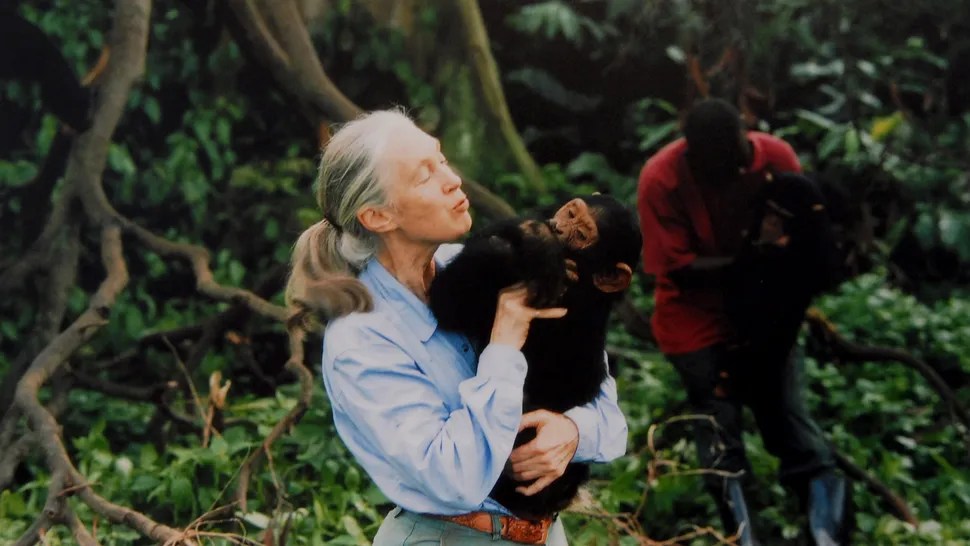
 Jane Goodall, the world’s foremost expert on chimpanzees, has died at the age of 91, the Jane Goodall Institute (JGI) confirmed in a statement on Wednesday (Oct. 1). Goodall died of natural causes in Los Angeles, California, while on a speaking tour.
Goodall “was a remarkable example of courage and conviction, working tirelessly throughout her life to raise awareness about threats to wildlife, promote conservation, and inspire a more harmonious, sustainable relationship between people, animals, and the natural world,” the JGI statement reads.
Dame Valerie Jane Morris-Goodall was born on April 3, 1934, in London. As a child, Goodall was fond of animals, including the 1920 book “The Story of Dr. Dolittle,” and intrigued by the ecosystems of Africa. On a trip to Kenya in 1957, she met paleoanthropologist Louis Leakey, who convinced Goodall that studying the behavior of chimpanzees (Pan troglodytes) might provide insights into the behavior of early human ancestors.
 Dispatches From The Front