The Rising Trend of Generational Tobacco Bans in Massachusetts | Small Biz Trends

New laws on the books in Massachusetts are threatening the future of some historic local tobacconist businesses.

Following a landmark decision by the Massachusetts Supreme Judicial Court, several Greater Boston towns are adopting something known as a generational tobacco ban.

As reported by Cigar Aficionado, the legislative actions are setting a precedent that could influence broader state and national tobacco regulations. Often with local governments, one board of councilpersons gets their ideas from another – a monkey-see, monkey-do scenario.

In March 2023, the court upheld a bylaw in the Boston suburb of Brookline that prohibited the sale of tobacco products to anyone born in the 21st century. The ruling catalyzed similar policies across neighboring towns, each with the goal of  a “Nicotine-Free Generation.”

Other towns in Massachusetts like Stoneham, Wakefield and Melrose have quickly enacted or are considering similar bans – all set to take effect by January 2025.
Read More

Not just Boston: Why no one wants to host the Olympics anymore | Mashable

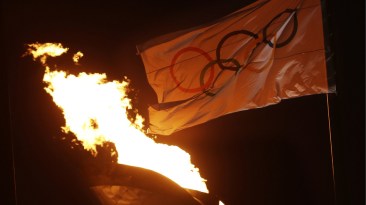
Boston revealed Monday afternoon that it had withdrawn itself from consideration to host the 2024 Summer Olympics. The announcement came hours after mayor Marty Walsh said he wouldn’t sign any contracts that left local taxpayers on the hook for cost overruns, which are virtually guaranteed to balloon anytime anyone hosts a global sporting mega-event.

At first glance, his words may have seemed like a relatively minor act of populist defiance. Yet Boston’s thanks-but-no-thanks actually reveals something much deeper. No one wants to host the Olympics anymore — nor should they.

There are, of course, success stories — Barcelona in 1992 is seen as a win for all involved, for example. But for illustrations of why the Olympics have become radioactive for most prospective hosts, one need only look at the recent past.

Surely you haven’t forgotten Sochi last year, when journalists and athletes stepped into a chaotic construction scene just days ahead of the Games. The most expensive Olympics in history cost more than $50 billion to pull off, enriching a small minority as the rest of the country’s economy languishes. Just eight months after the closing ceremony, Sochi was described as a “ghost town.”

Or let’s look back 10 years before Sochi, to the 2004 Olympics in Athens. Greece spent $10 billion to host those Games. Today, Greece’s economy is in tatters. Could these two things somehow be related?

Read More.