Stunning new footage captures the moment adult orcas carefully teach their calves how to hunt, demonstrating how to push a seal off a bit of ice before getting the young to give it a go themselves.
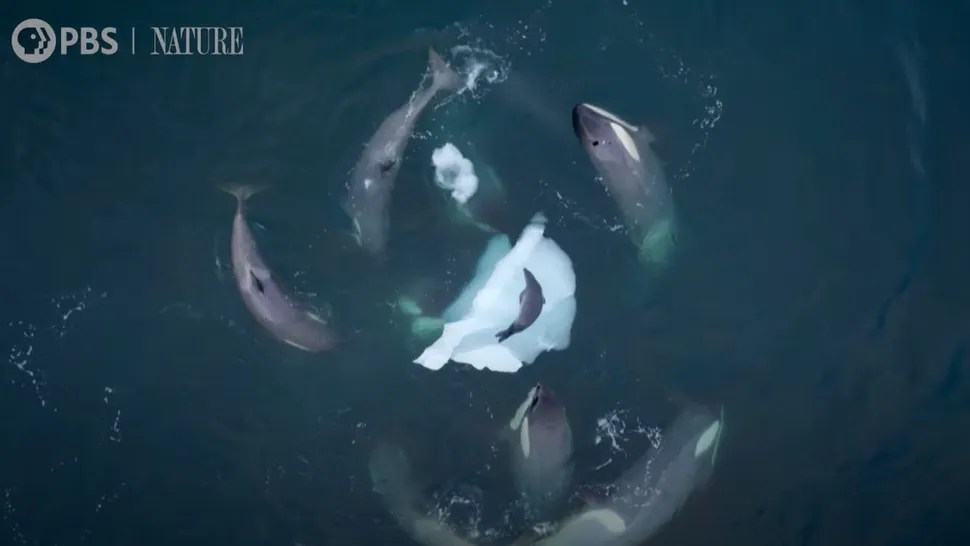 The clip shows a group of seven orcas — four adults and three calves — as they circle a seal on a tiny chunk of ice in western Antarctica’s Marguerite Bay. The lesson, which lasted over an hour, was filmed for the new PBS show “Nature: Expedition Killer Whale,” which follows a remarkable group of pack ice orcas (Orcinus orca) that live off the coast of Antarctica.
“The biggest surprise was the careful, measured way in which the females kept the seal corralled close to the piece of ice without fatally injuring it, so that it would climb back out onto the ice,” Leigh Hickmott, a whale biologist and science advisor for the show, who observed the encounter from a boat nearby, told Live Science in an email.


 Dispatches From The Front