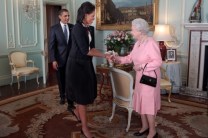
 In 1776, whether you were declaring America independent from the crown or swearing your loyalty to King George III, your pronunciation would have been much the same. At that time, American and British accents hadn’t yet diverged. What’s surprising, though, is that Hollywood costume dramas get it all wrong: The Patriots and the Redcoats spoke with accents that were much closer to the contemporary American accent than to the Queen’s English.
It is the standard British accent that has drastically changed in the past two centuries, while the typical American accent has changed only subtly.
Traditional English, whether spoken in the British Isles or the American colonies, was largely “rhotic.” Rhotic speakers pronounce the “R” sound in such words as “hard” and “winter,” while non-rhotic speakers do not. Today, however, non-rhotic speech is common throughout most of Britain. For example, most modern Brits would tell you it’s been a “hahd wintuh.”

 Dispatches From The Front