 For residents of minority urban neighborhoods, access to Amazon.com’s vast array of products—from Dawn dish soap and Huggies diapers to Samsung flatscreen TVs—can be a godsend. Unlike whiter ZIP codes, these parts of town often lack well-stocked stores and quality supermarkets. White areas get organic grocers and designer boutiques. Black ones get minimarts and dollar stores. People in neighborhoods that retailers avoid must travel farther and sometimes pay more to obtain household necessities. “I don’t have a car, so I love to have stuff delivered,” says Tamara Rasberry, a human resources professional in Washington, D.C., who spends about $2,000 a year on Amazon Prime, the online retailer’s premium service that guarantees two-day delivery of tens of millions of items (along with digital music, e-books, streaming movies, and TV shows) for a yearly $99 membership fee. Rasberry, whose neighborhood of Congress Heights is more than 90 percent black, says shopping on Amazon lets her bypass the poor selection and high prices of nearby shops.
Tag: Amazon
Amazon and Apple Want to Save Your Sleep by Tweaking Screen Colors | WIRED
 IN THE NOT-SO-DISTANT future, your personal tech will behave like the sun. It will rise and shine brightly in the morning, and set and dim its lights as the day winds down. In a recent preview for iOS 9.3, Apple teased a new feature called Night Shift that does exactly this, automatically altering the color of your screen display to make it orange-colored in the evening. Last month, Amazon released a similar feature, called Blue Shade, in an OS update for its Kindle Fire reading tablets. The new feature lets nighttime users dim the amount of blue light that comes off the Fire’s screen, in favor of a mellow, amber glow.
5 Ways Any Business Can Survive (and Thrive) Against Amazon | All Business
 The last twenty years has seen a dramatic shift in the retail landscape ever since Amazon burst onto the scene. Offering a vast selection and ever-shorter shipping times, Amazon came to dominate retail sales, starting with books and quickly expanding to other categories.
Yet for all of Amazon’s disruption, the online giant is not invincible. Many retailers and etailers have built significant businesses by refusing to accept the status quo. Any business can learn to beat Amazon by incorporating these five easy tips:
1. Create a unique voice.
Many businesses believe they are unique when they really do not have anything that truly sets them apart. In order for a brand to stand out, it must have a story that aligns with both their business values and personal values.
Amazon Acquires Elemental Technologies For A Reported $500 Million In Cash | TechCrunch
 Amazon announced this afternoon that it’s acquiring Elemental Technologies, a backend mobile video service.
It’s paying around $500 million in cash for the company, according to a new report from The Information. (Subscription required.)
Amazon didn’t immediately return a phone call or email request for comment about that figure.
The deal was orchestrated by Amazon’s highly profitable Amazon Web Services unit, which will incorporate Elemental’s technology into its cloud infrastructure services mobile video offering, says The Information.
Elemental, which makes high-speed video encoding and transcoding software to enable multiscreen content delivery across different devices, was founded nine years ago in Portland, Ore., and counts among its many customers ABC, BBC, Comcast, Ericsson, and ESPN.
Any Amazon Prime customer can now buy Dash buttons | Mashable
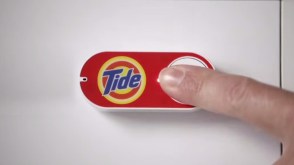 It’s been five months since Amazon announced the Dash button, a physical device slightly larger than your thumb that lets you orders more goods with a single tap. Now, the Seattle tech giant is taking the Dash button out of the invite-only stage and making it available to all Prime customers for purchase.
Prime customers can purchase Dash buttons for $5 each starting Wednesday; the company will credit you for the cost of your first button.
The company is also expanding the number of available button types -– one for each brand partner -– from 18 to 29. The additional 11 brands include Ziploc, Dixie tableware, Hefty trash bags, Finish dishwashing detergent, Depend diapers, Ice Breakers Mints, Orbit gum, Greenies dental chews, Mrs. Meyer’s Clean Day products, Digestive Advantage probiotic supplements, and Optimum Nutrition Gold Standard 100% whey protein.
The Future Of Retail Won’t Be So Good For Consumers | TechCrunch
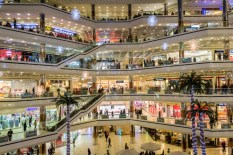
Shopping — both online and offline — is a great luxury of the modern era. People can enjoy a great selection at lower prices and shop from the convenience of their home, while still having the option of going to a local mall or retailer to peruse the aisles for instant gratification.
But consumers can’t have their cake and eat it, too, and the retail world as we know it today can no longer give it to them.
Retail Will Change Forever
Technology is killing the traditional retailer. Victims will include those selling commodity brand-name-type products like consumer electronics, appliances, sporting equipment and furniture, and may even include those selling consumable goods.
Price wars, combined with technology shifts, will eliminate national, regional and local competitors who just can’t keep up. Many of today’s vendors will cease to exist as online shopping takes larger shares of all sorts of markets. Just look at the trends in companies like Best Buy, Staples, Radio Shack and Sears.
TV Is Losing Ground to the Internet Where It Really Counts | WIRED
 AS A SPATE of new shows from Netflix and Amazon prove that some of the best television being made streams rather than airs, TV will take a financial hit. PwC’s annual five-year forecast for entertainment and media released today has revised downward the growth rate for ad spending on television. Last year, PwC predicted advertising would increase 5.5 percent annually over the next five years; now PwC says that rate will slow to just 4 percent annually through 2019.
And those are just the global figures. In the United States, TV ad spending is growing by just a little more than 3 percent annually on average. By contrast, spending jumped 5 percent between 2013 and 2014, the most recent years that PwC makes available.
This Entrepreneur Thinks His Startup, Farmigo, Will Kill Off Supermarkets | Forbes
 In the not-too-distant future, says Benzi Ronen, founder and CEO of Farmigo, consumers will use mobile phones to order non-perishables like toothpaste and toilet paper from Amazon and then buy their fresh food–from “humanely raised” lamb chops to “locally foraged” ramps–from his six-year-old online grocer based in Brooklyn, NY. Using technology and community-organizing techniques borrowed from the Obama campaign, he is building a network of Farmigo reps who are spreading the word throughout their neighborhoods and distributing food at weekly pick-ups. Farmigo operates only in New York, New Jersey and parts of northern California, but Ronen, 44, believes he can take his model to all 50 states. This interview has been edited and condensed.
Amazon Launches Amazon Business Marketplace, Will Close AmazonSupply | Forbes
 In 2012, Amazon.com AMZN -1.01% quietly launched AmazonSupply, the e-commerce company’s foray into the unsexy but hugely lucrative world of B2B wholesale.
By 2014, when Forbes covered the burgeoning business, AmazonSupply was already offering 2.2 million products for sale in 17 categories, from tools and home improvement to janitorial supplies, stocking everything from 12-packs of Hawaiian Punch to schedule-40 stainless steel pipe.
Industry insiders were already concerned about the potential impact of AmazonSupply on America’s 35,000 distribution companies, almost all of which are regional and family-run. Could they compete with AmazonSupply’s infrastructure and deep cache of consumer data?
Now Amazon is taking its quest to win over the $7.2 trillion B2B sector a step further. On Tuesday, the Seattle-based web giant is launching Amazon Business, a new platform aiming to do for business customers what Amazon.com has done for everyday shoppers.
Amazon Echo: This is what a smart home should feel like [REVIEW] | Mashable
 The Echo is Amazon’s latest futuristic gadget experiment. It’s one part Bluetooth speaker and one part personal voice assistant. And it blew my mind.
You control the Echo with your voice; you can tell it to do things like play music, read news briefs aloud, add items to your to-do and shopping lists, and tell you the weather. In other words, the Echo is like the realization of HAL 9000 in a black canister, only without the frightening pulsating red camera eye, and not nearly as intelligent.
 Dispatches From The Front