Amazon Pharmacy is launching vending machines for prescription drugs | TechCrunch

Amazon announced on Wednesday that it’s debuting prescription vending machines at its One Medical clinics. The new in-office kiosks, which are operated by Amazon Pharmacy, let patients pick up their prescriptions immediately after their appointment.

Amazon Pharmacy Kiosks will be available at One Medical locations in Los Angeles starting in December, and Amazon plans to expand to more locations soon after.

After a provider writes a prescription, patients can choose to have it sent to Amazon Pharmacy for in-office kiosk pickup. Patients then use their phone to check out in the Amazon app, after which medications are typically “ready in minutes,” Amazon says.

Read More

Amazon’s Agentic AI: Empowering Robots to Understand and Act on Human Commands | Cool Business Ideas

Amazon is pioneering a future where warehouse robots like Proteus can comprehend and execute spoken instructions. The company’s new Agentic AI team is developing an AI foundation model framework designed to revolutionize robotic operations, enabling machines to understand natural language, reason, and act autonomously.

Impact:

This innovation signifies a transformative shift in human-robot interaction within Amazon’s operations. By allowing robots to process and act upon verbal commands, the technology aims to enhance efficiency and safety in warehouses. Additionally, Amazon introduced “Wellspring,” a generative AI initiative to improve last-mile delivery precision and driver experience, and unveiled the latest AI foundation model for its Supply Chain Optimization Technology (SCOT), which processes over 400 million items across 270 time spans. These advancements collectively promise to streamline operations, reduce costs, and improve customer satisfaction.

Read More

IXI raises $36.5M from Amazon and others to bring autofocus to prescription glasses | TechCrunch

Blink and you’ll miss it: A startup out of Finland is taking a new look at the market for prescription eyewear. Tapping into innovations in eye-tracking and liquid crystal lens technology, IXI is building low-power glasses that will invisibly and automatically adjust to account for a wearer’s presbyopia (far-sightedness).

Four years into its life, Helsinki-based IXI emerged from stealth on Tuesday, announcing that it’s raised a total of $36.5 million from a list of investors that include the Amazon Alexa fund, to work towards its first commercial product.

London-based VC firm Plural is leading the latest tranche of Series A funding, with participation from Tesi, byFounders, Heartcore, Eurazeo, FOV Ventures, Tiny Supercomputer, and existing investors. The startup’s previous investors, in addition to the Amazon Alexa Fund, include Maki.vc, First Fellow, First Minute Capital, John Lindfors, Illusian (a family office of European founders similar to ICONIQ in the U.S.), and the Bragiel Brothers.

Read More

How Amazon is using its massive delivery infrastructure to help L.A. wildfire relief | Fast Company

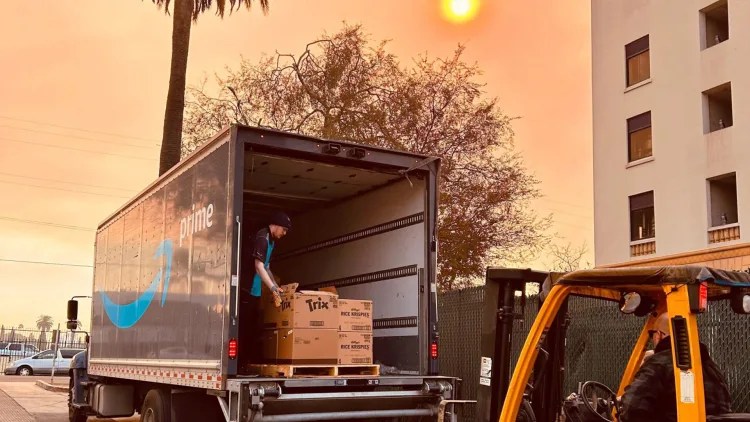
When a red flag warning was issued in Los Angeles on January 7, a team at Amazon started reaching out to local nonprofits and fire agencies. In a warehouse outside the city—around 60 miles east, in San Bernadino County—the company had opened a wildfire disaster relief hub just months earlier, stocked with free firefighting equipment, from axes to boots to trauma kits.

The hub, which sits inside part of a regular Amazon fulfillment center, is one of 14 disaster hubs that the company now runs around the world, donating all of the supplies and logistics support. The work started in 2017, after conversations with nonprofits about the challenges of logistics in a crisis. “The more we spoke with first responders and nonprofits, we realized that it’s really, really hard to procure the right items at the speed that they’re needed,” says Bettina Stix, director of disaster relief and food security for Amazon Community Impact.

Read More

Amazon forms a new AI agent-focused lab led by Adept co-founder | TechCrunch

Amazon says that it’s establishing a new R&D lab in San Francisco, the Amazon AGI SF Lab, to focus on building “foundational” capabilities for AI agents.

The Amazon AGI SF Lab, which will be led by David Luan, the co-founder of AI startup Adept, will seek to build agents that can “take actions in the digital and physical worlds,” and “handle complex workflows” using computers, web browsers, and code interpreters.

“Our work will build on that of Amazon’s broader AGI team,” reads a post jointly written by Luan and Pieter Abbeel, a robotics research lead who joined Amazon by way of the company’s “license and hire” deal with Covariant. An Amazon spokesperson tells TechCrunch that Abbeel will be working “closely” with Luan and the AGI SF Lab going forward.

Read More

Amazon responsible for product recalls, says US | BBC News

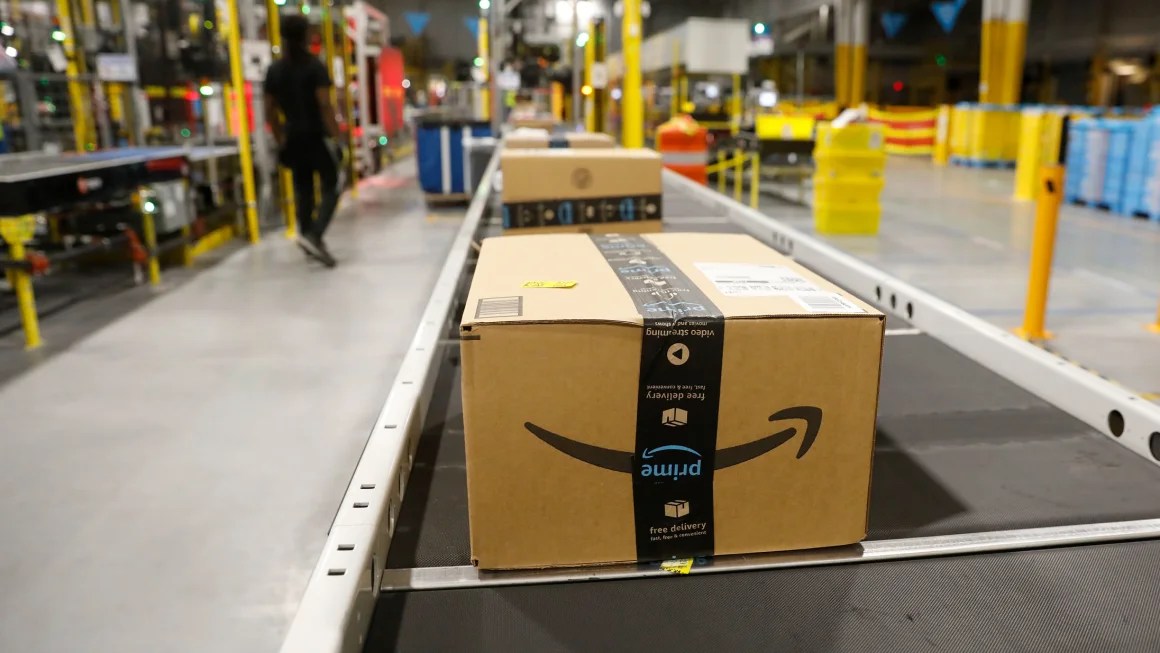
US regulators have ruled that Amazon is responsible for handling recalls of unsafe products sold on its site and must improve its process.

They said Amazon’s alerts were not sufficient to convince its customers to stop using such products and ordered the company to submit a new plan for how it will respond.

The decision by the US Consumer Product Safety Commission (CPSC) came after the agency sued the e-commerce giant in 2021 for distributing more than 400,000 hazardous items, including faulty carbon monoxide detectors.

Amazon said it planned to appeal the finding while defending its practices.

Read More

Amazon CEO Andy Jassy: This Is How You Earn Employees’ Trust | Entrepreneur

Amazon CEO Andy Jassy recently spoke in a company video about the successful principles of good leaders.

Jassy said that one important principle is earning trust from your employees — but not in the way that people might think.

“They sometimes confuse it with being nice to one another or having social cohesion or not challenging each other in meetings. That’s not what we mean,” Jassy said. “What we mean is being honest, authentic, straightforward, listening intently but challenging respectfully if you disagree, and then delivering what you said you would.

Jassy added that, if you want to earn trust, you have to deliver news to employees, good or bad.

Read More

Whole Foods Co-Founder John Mackey Talks Selling to Amazon and What Excites Him Now | Business

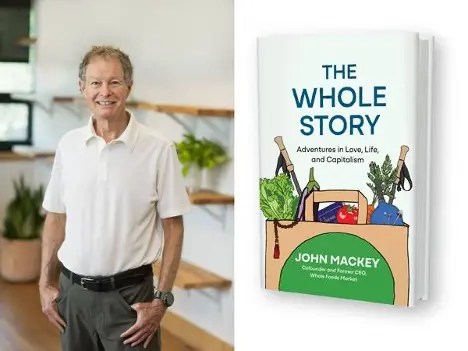
Many people start successful businesses, but few change how the rest of us live — or eat, for that matter. Natural, organic, and vegetarian diets were niche “health-nut” interests when John Mackey opened the first Whole Foods Market in 1980. By the time Amazon purchased the company for nearly $14 billion in 2017, they were mainstream lifestyles.

As CEO from Whole Foods’ founding until 2022, Mackey has a unique perspective on growing and selling a category-redefining business, which he recounts in his new memoir The Whole Story: Adventures in Love, Life, and Capitalism. He spoke with b. about negotiation, keeping (most) customers happy, and the continued importance of location, location, location.

Read More

Amazon’s cashier-less technology was supposed to revolutionize grocery shopping. It’s been a flop | CNN Business

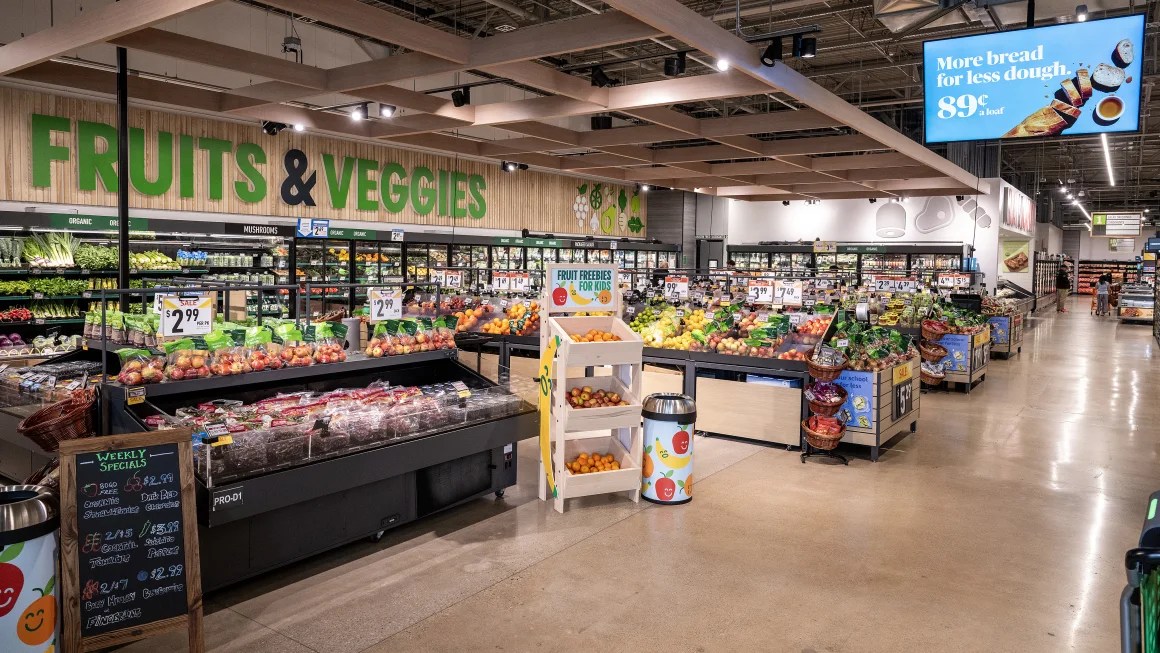
When Amazon debuted cashier-less technology, it was hailed as the future of retail. But now, Amazon is walking back its “Just Walk Out” technology at its grocery stores, reining in grand promises of an automated, friction-less checkout.

Amazon said it is removing the technology at US Amazon Fresh grocery stores which allows customers to pay for their groceries without waiting in line for a cashier or using a self-checkout machine. Instead, Amazon said it’s replacing it with Dash Cart at its more than 40 locations, a “smart shopping cart” which allows shoppers to scan groceries, link to online shopping lists and check out their groceries. The company has been testing Dash Carts at some Fresh and Whole Foods locations in the past.

Customers just haven’t bought into cashier-less technology, especially in grocery stores where they purchase larger quantities and face extra tasks such as weighing produce. Amazon says the checkout technology may be more seamless in smaller stores – that could include the Amazon Go convenience stores.

Read More

Amazon is replacing Walgreens in the Dow Jones Industrial Average | CNN Business

Walgreens Boots Alliance is getting the boot from the 30-stock Dow Jones Industrial Average and Amazon is taking its place.

S&P Dow Jones Indices, which manages the index, said in a statement Tuesday that the change is intended to reflect “the evolving nature of the American economy” by increasing the Dow’s consumer retail exposure.

The change means that investors who bet on the Dow Jones Industrial Average will now have exposure to Amazon’s stock performance.

Amazon joins Apple and Microsoft as the third company from the “Magnificent Seven,” a group of high-performing tech stocks, to join the Dow 30. The other four companies in the group — Meta, Nvidia, Tesla, and Alphabet — are not included in the index, though all seven stocks are included in the much larger S&P 500 index.

Read More