7 Ways to Implement AI in Your Business | AllBusiness.com

In the evolving business landscape, artificial intelligence promises a future in which tedious chores are automated, choices are informed by data, and innovation is welcomed and celebrated. And there’s no going back—the market will continually become ever more advanced by machine learning and other AI integrations. Leaders of both new and established companies know it is paramount to transform operations to thrive in the new AI era. But how exactly can they do that?

For companies that are ready to embrace AI, the future brings unrivaled promise and opportunity. Here is how all companies can excel in the new AI era.

Strategies for businesses to succeed in an AI world

1. Provide an AI-driven customer experience

To thrive in today’s dynamic market, it is essential for businesses to gain a greater understanding of customer preferences. AI is key for deep-diving into the true wants, needs, and concerns of both current and potential customers, which can give businesses an edge over their competitors. While traditional analytics only offer a glimpse into customer behaviors and preferences (i.e., WHAT they choose to buy and WHEN), AI algorithms provide an understanding of WHY customers choose the products and services they purchase (and pass over others).

Read More

The copyright issues around generative AI aren’t going away anytime soon | TechCrunch

Generative AI has brought a host of copyright issues to the fore. Just this week, authors including George R.R. Martin, led by the Authors Guild, filed a lawsuit against OpenAI, alleging that the startup’s viral AI-powered chatbot, ChatGPT, was trained on their work without their knowledge or consent.

And it’s not just OpenAI that’s having to contend with this. Onstage at Disrupt 2023, Anastasis Germanidis, one of the co-founders of Runway, a company developing generative AI tools for video, said that his company is “still exploring” the right approach to training AI models on artists’ and creators’ works.

“We’re working closely with artists to figure out what the best approaches are to address this,” Germanidis said. “We’re exploring various data partnerships to be able to further grow … and build the next generation of models.”

Read More

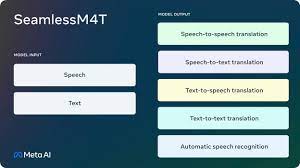
Meta releases SeamlessM4T AI model for text and speech translation | Mashable

Meta’s latest AI output is a major advancement for real-time text and speech translation.

On Tuesday, the company released SeamlessM4T: a multimodal model that translates text to speech and vice versa. Meta claims SeamlessM4T is “the first all-in-one multilingual multimodal AI translation and transcription model,” meaning it is uniquely able to translate and transcribe languages at the same time. SeamlessM4T can translate speech-to-text, speech-to-speech, text-to-speech, and text-to-text inputs for up to 100 languages. Translations for speech-to-speech and text-to-speech translations outputs support 35 languages.

Read More

Who Is the Better Hire: A Human or a Robot? | Business.com

In some restaurants, robots have replaced waitstaff, and they serve patrons food cooked by robotic chefs. BuzzFeed now uses artificial intelligence (AI) to generate some of its online quizzes. The seemingly sudden rise of ChatGPT, an AI tool that’s capable of generating text based on written prompts, has highlighted a revolution that’s been underway for at least two decades.

What made it feel so different this time around was that ChatGPT seems like such a leap into the future. The public had little idea that the tech was so advanced and was caught off guard by its capabilities. So, for your next big hire, should you go for a human or a robot? We look at the pros and cons of robots and AI in the workplace and discuss when humans might be preferable to machines.

Read More

AWS brings easy AI app development to companies | Digital Trends

The future of artificial intelligence is quickly being made into an out-of-box experience that companies can customize based on their specific needs. Optimized chat experiences that are functional far beyond question-and-answer and tools to create AI applications without months of coding development could be the next step outside of introducing new plugins and extensions.

More commonplace tools, such as ChatGPT for information and Midjourney for images rely on public data and consistent developer coding to create an end product. Meanwhile, Amazon Web Services (AWS) is committed to making generative AI that is not only more productive and easier to navigate but also data unique and data secure to the companies that deploy its tools.

Read More

Google Search can check your grammar now | Mashable

Google can now help you check your grammar, right there in the search bar.

The new AI-powered grammar check, which is only available in English so far, can help users see if “a phrase or sentence is written in a grammatically correct way or how to correct it, if not.”

It’s a pretty easy feature to use. Enter a sentence or phrase into Google Search, followed with the word: “grammar check” or “check grammar” or “grammar checker”. Sometimes these phrases aren’t even needed, but using them will ensure that the tool will pop up.

If the phrase entered is correct, Google will present a green check mark.

Read More

Zoom might use your calls and data to train AI | Mashable

There’s a chance your video calls will be used to train artificial intelligence.

Zoom updated its terms of service this week to allow it to use some of its users’ data for training AI. And the wording reads pretty strong, leading to lots of fears online.

The terms state the you grant Zoom “perpetual, worldwide, non-exclusive, royalty-free, sublicensable, and transferable license and all other rights required or necessary” to customer content for a number of purposes, now including “machine learning” and “artificial intelligence.” Another section of the terms state that Zoom can use certain user data for “machine learning or artificial intelligence (including for the purposes of training and tuning of algorithms and models).”

Read More

You can now ‘expand’ images in Photoshop using AI | Digital Trends

Adobe is updating its Photoshop app with a new AI-powered feature that will allow you to easily make an image larger and add context to the image based on its original subject.

The feature, called Generative Expand, is now available to Photoshop beta users. You’ll be able to expand images in any direction and generate an additional scene for the space with a combination of traditional app tools and AI. It uses Photoshop’s crop tool in conjunction with a text field for a prompt to create the details for the image you want to add.

Read More

3 Things to Look for to Determine If AI Is Being Used Ethically | Entrepreneur

AI has been a topic of great interest — we’re all amazed by its potential and the impact it may have on our lives, mostly because AI is the first tool in history that can make decisions by itself. Take ChatGPT as an example. It embodies more knowledge than any human has ever known. This tool can be a force for enormous good. Imagine what AI can do in healthcare and its enormous databases of genes, medicines and disease symptoms, and drug interactions, for example? It can literally save lives. But that’s also a huge responsibility we’re putting on a technology that we haven’t even begun to fully understand.

As investors, entrepreneurs, and users, we directly impact where the technology will go, and we are setting the stage for where it will end up.

Read More

Google adjusts privacy policy allowing use of public data for AI training | Mashable

Google can now use public data to help train and create AI products, according to new privacy policy changes.

As of July 1, the tech giant’s newly adjusted policy reads: “Google uses information to improve our services and to develop new products, features and technologies that benefit our users and the public. For example, we use publicly available information to help train Google’s AI models and build products and features like Google Translate, Bard, and Cloud AI capabilities.”

Previously, the policy only stated that publicly available information could be used to help train Google “language models” and gave a single mention of Google Translate.

Read More