GM will introduce eyes-off driving in 2028 | CNN Business

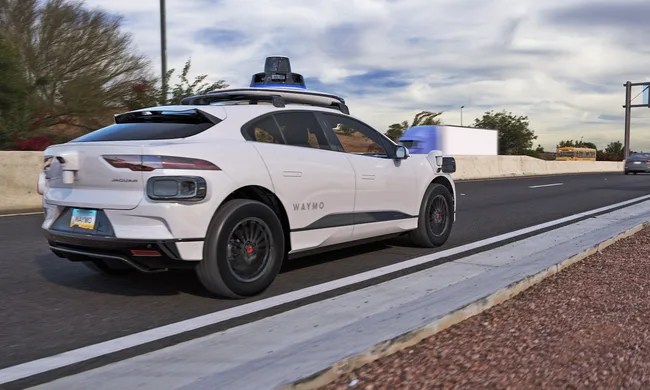
General Motors, the 100-year-old car company that has struggled with its expensive modernization efforts, plans to offer Americans hands-free driving and the freedom to watch a movie on the go.

The company unveiled new “eyes-off” driving technology that will be available starting in 2028, part of a new technology initiative revealed by GM executives in New York on Wednesday. The automaker said the initiative includes a conversational AI technology that will be introduced into vehicles next year.

“Imagine you step into your vehicle, you push a button, and it drives you to the office. You catch up on work, send emails, or watch an episode of your favorite show,” said GM CEO Mary Barra. “The car drops you off … then it goes to get your dry cleaning, take out for dinner, and it comes back in time so you can drive your kids to their soccer game.”

Read More

Tesla posts bigger than expected drop in earnings despite record sales | CNN Business

You’d think after a tumultuous year for Elon Musk’s car company, Wall Street would be cheering Tesla’s record quarterly sales. They’re not.

That’s for two main reasons: First, Tesla’s profit fell from a year ago and missed analysts’ estimates.

Second, Tesla’s sales were largely booming last quarter because customers scrambled to nab electric cars before a US tax credit expired.

Shares of Tesla (TSLA) fell 2% in after-market trading following the report, but ahead of a call for investors scheduled for 5:30 pm ET.

Read More

New study reveals why time seems to move faster the older we get | Live Science

Scientists may be closer to understanding why time seems to pass more quickly as we age — and brain scans of people watching an old Alfred Hitchcock show helped them address this enduring question.

In a study published Sept. 30 in the journal Communications Biology, scientists pulled data from the Cambridge Centre for Ageing and Neuroscience (Cam-CAN), a long-term brain-aging research project. In total, 577 people had previously watched an excerpt from the old television series “Alfred Hitchcock Presents” — specifically, eight minutes of an episode called “Bang! You’re Dead.” As the study participants watched the clip, functional MRI (fMRI) scans were recorded; these scans would provide a measure of how the participants’ brain activity changed over time.

This particular clip was chosen because previous research showed that, compared with other video clips, it elicits the most synchronous patterns of brain activity in a wide variety of viewers. That makes it ideal for studying how the brain divides and tracks unfolding events.

Read More

Mysterious glow at the Milky Way’s center could reshape a major cosmic theory | Live Science

Dark matter near the center of our galaxy is “flattened,” not round as previously thought, new simulations reveal. The discovery may point to the origin of a mysterious high-energy glow that has puzzled astronomers for more than a decade, although more research is needed to rule out other theories.

“When the Fermi space telescope pointed to the galactic center, it measured too many gamma rays,” Moorits Mihkel Muru, a researcher at the Leibniz Institute for Astrophysics Potsdam in Germany and the University of Tartu in Estonia, told Live Science via email. “Different theories compete to explain what could be producing that excess, but nobody has the definitive answer yet.”

Early on, scientists proposed that the glow might come from dark matter particles colliding and annihilating each other. However, the signal’s flattened shape didn’t match the spherical halos assumed in most dark matter models. That discrepancy led many scientists to favor an alternative explanation involving millisecond pulsars — ancient, fast-spinning neutron stars that emit gamma-rays.

Read More

How Social Media Could Affect Your Job Search | Business News Daily

In today’s digital hiring landscape, it’s common for employers to go beyond traditional background checks and review a candidate’s online presence. A quick search can reveal far more than a résumé ever could.

You may think of your social media accounts as “personal,” but chances are, employers see them as part of the bigger picture when evaluating candidates. The good news? With some awareness and preparation, you can shape your digital footprint to leave a strong, positive impression. We’ll explain what social media screenings involve, why employers use them, and how you can manage your profiles to your advantage.

Read More

Why Is Delegation Important in Leadership? | LifeHack

Are you a manager with a to-do list that seems to stretch for miles? You finalize a client proposal, answer a barrage of emails, troubleshoot a team conflict, and try to make headway on a strategic plan for the next quarter. Your calendar is a jigsaw puzzle that’s getting more complex by the hour….

In this whirlwind, managers often hesitate to delegate. They worry that their team won’t complete tasks to their standard, or they fear that letting go of control might reflect poorly on their abilities. Some think that teaching someone else will take more time than just doing the task themselves.

Does this situation ring a bell?

Read More

Morning Routine for Productivity: Science-Backed 5-Phase System That Works | LifeHack

Let me be honest with you. Six years ago, my mornings were a disaster. I’d hit snooze four times, stumble to my laptop still half-asleep, and waste the first two hours of my day scrolling through emails and feeling overwhelmed. As the CEO of LifeHack and a father of two boys, I knew something had to change. My chaotic mornings were setting a terrible example for my kids and sabotaging my company’s growth.

Everything shifted when I discovered the neuroscience behind creating a morning routine for productivity and built a systematic approach around it. Within weeks, I was accomplishing more before 9 AM than I used to achieve in an entire day. My energy levels soared. Decision-making became clearer. Even my team noticed the difference—I was showing up as a better leader, more focused and present.

Read More

Nonprofits are lacking the resources to fully utilize AI | Fast Company

Uncertainty is the defining condition of our time. The pandemic reminded us how quickly our systems can fracture. Today, with political shifts, economic instability, and technological disruption intersecting, leaders are preparing for more turbulence ahead.

From where I sit, however, there are nearly 2 million reasons to be optimistic. America’s 1.9 million nonprofits make up a fiercely resilient force for scaling impact to our toughest challenges. They deliver food and housing, safeguard youth wellbeing, respond to natural disasters, and fight for fairness and opportunity. They are trusted by millions of people across many topic areas—and they are built to move fast, adapt, and deliver under pressure.

Read More

Why ending childhood hunger is a business imperative | Fast Company

Back-to-school season is in full swing, and with it comes the excitement of new teachers, new friends, and fresh beginnings. But for millions of children, this time of year also brings relief—because for the first time in months, they once again have consistent access to the food they need to concentrate, participate, and succeed.

While summer conjures images of vacations and play for many children, it can be a time of increased hunger and skipped meals for families working hard to make ends meet. When schools close, so do their cafeterias, meal programs, and pantries, resulting in more than 20 million kids losing their most reliable source of daily nutrition. And with rising food costs and a worsening job market, parents are finding it harder than ever to put nutritious meals on the table.

Read More