Five lessons from John Lewis’ mobile commerce strategy | Econsultancy
At the start of the year, retailer John Lewis announced some impressive year on year sales figures, along with the revelation that more than three quarters of its site traffic on Christmas Day came from mobile devices.

Its profits continue to look very healthy, and mobile is an ever growing proportion of its sales. So what is it that John Lewis is getting right with its mobile strategy? And what lessons can we learn in order to apply to our own?
These are some of the elements that John Lewis delivered on…
New Federal Guidelines Will Help Pregnant Workers | Elle

It took more than 30 years, but the U.S. Equal Employment Opportunity Commission EEOC finally clarified its rules against pregnancy discrimination, stating that any discrimination based on past or future pregnancies is illegal, and that employers must make reasonable accommodations for pregnant women. Now, any harassment or discrimination against pregnant workers is an illegal form of sex discrimination. Under the new guidelines, lactation is also considered a medical condition.
The clarification was necessary because employers routinely interpreted the anti-discrimination law narrowly, refusing to accommodate pregnancy the same way they would a physical disability. Pregnant workers who needed simple accommodations—say, not doing heavy lifting or sitting during breaks instead of standing—faced a series of bad options.
4 Things That Will Improve The Checkout Experience | Wonderbranding.com
Just because your customer is making a purchase in your retail location doesn’t mean you should relax at the cash register. Every moment she spends with you is an opportunity to improve your image and deliver a memorable customer experience.

Here are 4 things you can do at low-or-no-cost:
Clean off your counter and give room to maneuver. It’s very tempting to load your counter space with point-of-purchase displays and impulse buying options. Are they hindering rather than helping your checkout process? Customers need room – space for purses, shopping bags, wallets, checkbooks, etc. Not to mention space around the checkout area to park strollers, umbrellas, etc. while mom checks out. A large, spacious counter area is inviting and most welcome.
Doing Things Differently to Succeed in Business | Getentrepreneurial.com
If you want to succeed in business there are certain things you’re going to have to do the same as everybody else, such as getting your name out there and, yes, paying your taxes on time. There are other things, however, that you should go out of your way to do completely differently, to buck the trend on, in order to secure your place in the history books of successful business owners of the twenty-first century.
With more and more people becoming self-employed and starting their own companies, the competition is stronger than ever before. Rather than letting that deter you, you should see it as a challenge, as something to thrive upon. Sure, you’re unlikely to get anywhere if you follow the same old rules and regulations. But if you choose to do things just that little bit differently to everybody else, success could be just around the corner.
To help you along your way, below are four thing you should start doing differently in your business, right now, to help ensure your success for years to come:
The Biggest Employee Deal-Breakers | Businessnewsdaily.com

What matters most to employees? Career advancement, work-life balance and money, according to a new study from human resources software provider BambooHR.
But the survey of more than 1,000 employees in the United States discovered something of a surprise. While most workers reported career advancement as the No. 1 reason for leaving their job, the biggest deal-breakers were related to work-life balance.
The study found four critical deal-breakers that affect employeehappiness and retention. The biggest employee deal-breaker is having a boss that doesn’t trust or empower employees, followed by being expected to work or answer emails on sick days, on vacations or after work hours. Management “passing the buck” when things don’t go as planned is third, and fourth is when work isn’t flexible with regard to an employee’s family responsibilities.
How to Escape the Illusion of Time Management | AllBusiness Experts
“Oh man, I have so much to do today. I really need to learn to manage my time better.”

It’s a story as old as time itself. We look at a big list of things we need to accomplish and start divvying up the amount of time we have to get them done. We slice it and dice it and manage every little bit of it. We fret about how much time is passing while we’re trying to get everything organized. We make lists and schedules and then fret about whether we are ahead or behind. We tend to call that “time management.”But believe me, it’s an illusion. There is no such thing as “time management.”
For one thing, “time management” implies that there is something controllable about the passage of time. Unless you’re an experimental physicist with a DeLorean and a flux capacitor, there really isn’t anything you can do about how many hours are in the day. Your job isn’t to manage time, it’s to manage priorities
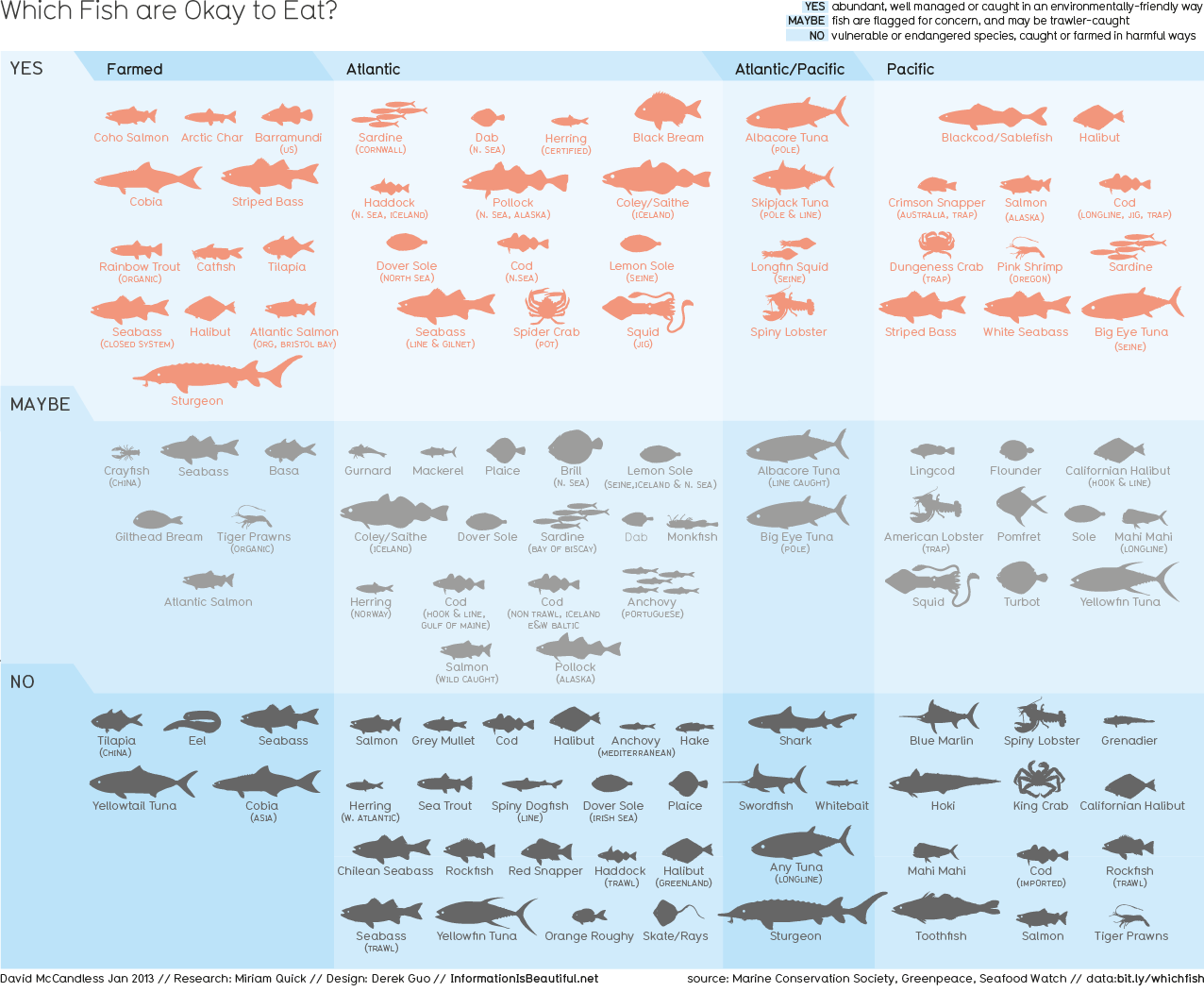
The Buzz vs. The Bulge | Information is beautiful

Do You Feel Pressure Or Do You Apply Pressure? | TechCrunch
One obvious yet under-appreciated law of business physics is:
For any given company, the larger the company becomes, the more opportunities emerge to screw it up.
Another obvious but not well-understood law:
The more screwed up your company, the more people will complain about it and blame you.

If we take these two together, it is easy to see that without intervention, the larger your company becomes, the more people will complain and blame you.
This seems simple enough, but CEOs often fail to understand the logic, become overwhelmed by the criticism, lose confidence in themselves, and decide that they are no longer capable of running their own companies. This can be tragic as I explained in “Why We Prefer Founding CEOs.”
Google Inks a Deal With Novartis to Make Smart Contact Lenses | Mashable.com
Google’s “smart contact lens” just went from patents to partners.

The Google X project is now officially in lock step with healthcare giant Novartis, the parent of Alcon, which produces some of the most-widely used contact lens products on the market, including Air Optix, FreshLook and Dailies. Novartis will work on turning Google’s lab project into smart contact lenses for people around the world.
A product of Google Research, the smart lenses look like traditional contact lenses. The company’s eye care division, Alcon, will license Google’s smart lens and co-develop them for a variety of ocular medical uses.
Ophthalmic electrochemical sensors in the contact lenses are designed to measure glucose levels and offer real-time updates to an app on a connected mobile device for people with diabetes. Google secured a patent for the technology earlier this year

