Women pay 76 cents to men’s $1 at shop promoting wage equality | mashable

You pay what you earn at a tiny shop in Pittsburgh that is take a strong stance on gender equality.

Elana Schlenker’s pop-up shop, Less Than 100, sells gifts like ceramics, paper crafts and art by independent makers. It’s like a brick-and-mortar Etsy, except for one distinctive attribute: men pay more.

“I don’t think anyone should be discriminated against, but the wage gap is a pervasive problem and we need to recognize the ways in which our (often unconscious) biases are perpetuating it. I hope the shop sparks conversation around the issue,” Schlenker told Mashable in an email.

Specifically, Less Than 100’s pricing reflects the current average wage gap in Pennsylvania. Women there are paid 76 cents compared to every dollar a man earns for the same job.

It’s not that items are being marked up for men, technically. Rather, women are getting a discount. According to the shop’s website, women pay 76% of any item’s full ticket price, and men pay the full amount.


Read More.

This Texas Gas Station Turned Camels and Karaoke Into a $30 Million Business | Inc.com

Texas-Gas-Station-Inline_30545Editor’s note: This tour of small businesses across the country highlights the imagination, diversity, and resilience of American enterprise.

Come for the cheap gas and tacos. Stay for the livestock and karaoke.

This is a typical Saturday night at Fuel City in Dallas. Two police officers direct traffic as cars line up for unleaded gas at $2.39 a gallon. All three taco windows are mobbed, as are the carts peddling elote en vaso (corn in a cup). Customers wander into the karaoke trailer (complete with disco ball) to belt out Tejana favorites, country classics, and oldies. Out back, longhorn cattle snooze on the ground. The zebra remains standing.

“Our slogan is ‘Where dreams come true,'” says Fuel City founder John Benda. “Maybe that’s a little corny. But that’s what I want this place to be.”

Read More.

5 Horrible Traits That Push People Away | Entrepreneur

There are certain horrible habits that some people have that simply drive others away. As the old saying goes, every person has something good to offer. But for some, it’s when they leave the room. Are people happy when you walk in or overjoyed when you walk out?

Here are five horrible traits that push people away, how to recognize if you have them and how to get rid of them for good.

1. You’re a downer.

We’ve all been around these people. They whine, they complain, they talk about how much is going wrong in their lives and they want to tell you every detail of it.

How do you know if it’s you that’s the downer? Pay attention to what you’re talking about the most. Did you complain about traffic as your opening line when you got to your meeting this morning? Did you make sure to tell those around you how little sleep you got last night, how hard you’re working or how busy you are?

Read More.

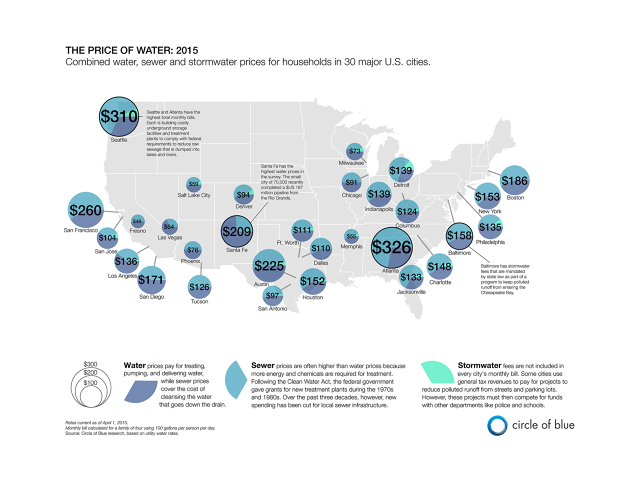
California’s Water Crisis Is The Result Of Market Failure As Much As Drought | Co.Exist

3046647-inline-i-1-californias-water-crisis-is-the-result-of-market-failure-as-much-as-droughtWeak pricing signals. Poor accounting. Byzantine rules. These are just a few of the reasons why California is in the midst of a water crisis. A lack of rainfall is perhaps the least of the state’s problems.

California’s situation is symptomatic of escalating water risks all across the world, where water is typically undervalued and, as a result, used incredibly inefficiently as more people than ever need it.

“There’s no room to hide anymore, this is where finance hits reality,” said Piet Klop, senior advisor of responsible investment at Dutch pension fund manager PGGM, who spoke with me recently about escalating water risks globally.

At meetings I attended across the state this month with water-savvy investors, the California drought always loomed large. In addition to fallowed farmland and depressed earnings, they acknowledged a larger more profound reality—the devastating drought and growing climate change impacts are likely the “new normal” for California.

Read More.

Japan Unleashes A Robot Revolution | Bloomberg Business

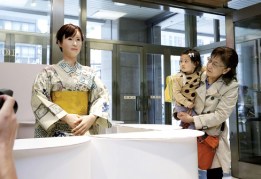
A new greeter at the entrance of the Mitsukoshi department store in central Tokyo has caused a stir. The worker, dressed in a kimono and cheerfully welcoming shoppers in honorific Japanese, is a robot made by Toshiba and shows how lifelike these machines can be.

This latest example of Japan’s skill comes just as Prime Minister Shinzo Abe is calling for a “robot revolution.” Advances in robotic computing power, the ability to recognize voices and images, and machine learning could help the country overcome the handicap of a fast-aging populace and a declining workforce.

At the opening of Japan’s Robot Revolution Initiative Council on May 15, Abe urged companies to “spread the use of robotics from large-scale factories to every corner of our economy and society.” Backed by 200 companies and universities, the five-year, government-led push aims to deepen the use of intelligent machines in manufacturing, supply chains, construction, and health care, while expanding robotics sales from 600 billion yen ($4.9 billion) annually to 2.4 trillion yen by 2020.

Read More.

Steps to a Successful Product Launch | Business News Daily

Got a great idea for a new product? In addition to its design and logistics, you’re probably already thinking about how you’re going to launch it.

A well-executed launch is your chance to grab customers’ attention and make a strong impression with your product. But like all first impressions, it’s hard to correct a product launch if it doesn’t go smoothly right off the bat — especially if it’s your very first product.

“Product launches are tricky because, unlike other marketing efforts, you really only have one chance to get it right,” said Daniel Waldman, president of PR and marketing firm Evolve Communications. “There’s not a lot of room for testing and refining tactics. Launches need to pack a punch.”

Read More.

Train Employees to Avoid Inadvertent Cyber-Security Breaches | Payroll Link

How much do you know about cybersecurity? Small business owners often lack the resources to enact a strong defense against cybercrimes and take for granted that their IT systems are relatively safe. To better understand some of the common ways employees can unwittingly become a conduit for hackers, take the following quiz. This quiz was adapted from a resource offered as a public service by AFCEA, an association of data security professionals.

True or False

1. Mobile applications downloaded from major brand online stores are generally safe.

False: These stores may try to vet mobile applications for malicious behavior, but there’s no guarantee they’re safe. Some online stores may not assess the legitimacy of an app at all, or not adequately.

2. The address or URL you see in the link is always the actual website to which you’re being directed.

False: Masking the real website address in links is a common way cybercriminals use to fool unsuspecting victims into visiting malicious websites. To see where a link actually leads, let your mouse hover over the link without clicking on it.

3. What you or your employees do on social media could have a negative impact on you or your organization.

True: Identity thieves, robbers and other criminals are adept at piecing together data bits from various social media sites, and using the information to plan online and physical attacks.

Read More.

Selling your Android phone? Don’t. It keeps your data. | Money CNN

If you recently sold your old Android phone, chances are your text messages, emails, pictures and Facebook key are still in there, even if you wiped its memory clean.

A new study by computer researchers at the University of Cambridge shows that “factory reset” — at least on Android devices — doesn’t actually erase everything.

Sometimes it doesn’t even come close.

The used smartphone market is huge and about 630 million phones out there are susceptible to this problem, according to the study. Wall Street analysts expect the market will keep blowing up in size until at least 2018.

Researchers tested 21 phones made by Google (GOOGL, Tech30), HTC, LG, Motorola (MSI) and Samsung (SSNLF). In every case, they were able to recover text messages, Google account credentials and conversations on messaging apps. A few emails remained on the device 80% of the time.

Read More.

Security Awareness: Phishing up the weakest links! | TekSec

phishing-security-awarenessWho (in their right mind) would like to appear as the corporate dunce who infected their company network (by clicking on an email attachment or url)? Not you, not me, and certainly not the PR department or the company CEO’s administrative assistant, or even the CEO himself.

Phishing is an activity that cybercriminals utilize to acquire personal and sensitive information. Whether it is an account username and password, credit card details, a social security number, or other personal data — it is designed to coax you into giving up your personal information for criminal gain. For those of us who have been unfortunate enough to click on a deceptive phishing link or email attachment, it is an event that most of us would probably rather forget.

Phishing it up

Most of us are aware that if an email arrives unsolicited and includes grammatical errors, we should just delete it and continue on with our day. Not all phishing emails contain bad grammar, unsolicited attachments, or immediately request sensitive information. Last summer I received an email that appeared quite genuine, so genuine in fact — that I almost became victim to a very clever phishing scheme.

Read More.