 When the DeLeons took over, the original 1949 contract transferred, meaning the Moorhead DQ doesn’t have to adhere to many strict company rules. Had they signed a newer contract, they would have had no choice but to discontinue their barbecue sandwiches and Polish dogs and launch a full Orange Julius menu like many newer DQ franchises. Thanks to their old-school contract, the Moorhead DQ still pays the original 1949 royalties rate on Dairy Queen treats that they order from the corporate warehouse. Perhaps most importantly, DeLeon is able to source ingredients from outside providers and still make many desserts in-house.
Trivia Tuesday: Which came first? Apple or Microsoft? | Neowin.net
 This is perhaps one of the biggest tech rivalries in the world, but the question I’m exploring today is which company came first? Which was the first to release an operating system? The first to release a tablet PC or smartphone? The first to create a billionaire?
The question of when the companies were founded is a pretty easy one. Microsoft came first, founded in Albuquerque, New Mexico on April 4, 1975. Apple followed nearly exactly a year later on April 1, 1976 in Cupertino, California.
The interesting thing, though, is Apple was technically the first company out of the two to release an operating system that used a graphical user interface (GUI). On January 24, 1984, the guys behind Apple released “Mac System Software 1.0” on their original Macintosh commercial computer. This was almost two years before Microsoft released their extension of MS-DOS on November 20, 1985: Windows 1.0. It also wasn’t particularly successful.
Humans Are Tech’s Next Big Thing—And That Could Be Risky | WIRED
 INTERNET COMPANIES MAKE billions of dollars by capturing one of the world’s most precious commodities: your attention. They need to amuse, amaze, entice, and intrigue you—and millions of users like you—to stay afloat and profit.
But figuring out what you want to read, watch, and see is harder than it looks. At Facebook, serving your wants and needs comes down to algorithms—click on something, and you’ll see more of that thing, and things like it. At Twitter, your desires are met via your choices—follow certain people, you’ll see updates from them. But, when it comes to channeling the most attention-grabbing content, it turns out that automation, or users left to their own devices, might not be enough.
Your Followers Got Purged – Now What? | BusinessTips.com
 The end of last year, and the beginning of this year, was rocky for businesses on social media. Instagram and Twitter dumped a bunch of fake accounts, and Facebook changed its policy so that inactive accounts would longer be including in a page’s total fans. Of course ostensibly this is a good thing – why would you want to market to a bunch of fake and inactive followers – but as most people know, higher follower counts on social media do help to boost a business’s credibility online. Losing a ton of people, then, can feel like a real shock. But don’t panic; there are a few things you can do.
Figure out why
Now, if you bought followers and, one day, they all disappeared, you know why. But a lot of small business owners never saw the point to buying fans, and they still occasionally see drastic dips in their follower totals. If you count yourself among them, there are few things that may have happened. The first is that you simply haven’t done very much in a while.
The 10 Commandments of Business from Jim Collins | Page19
 1. Find your Hedgehog concept. — Good to Great
Imagine a fox hunting a hedgehog. The fox is crafty and invents a battery of complex tactics to get at the smaller creature, yet despite all of its cunning, the fox never wins. The hedgehog has a simple, foolproof parry to any attack: it curls up and becomes an unbreachable spiked ball.
According to Collins, good-to-great companies find their own Hedgehog concept—something simple, clear, and fail-proof—by asking themselves three key questions:
What can we be the best in the world at?
What can we be passionate about?
What is the key economic indicator we should concentrate on?
Collins found that after an average of 4 years’ iteration and debate, good-to-great companies discovered their own Hedgehog concept at the intersection of these questions. After that point, every decision in the company was made in line with it, and success followed.
Take the example of drugstore chain, Walgreens. The Walgreens Hedgehog concept was to be the best, most convenient drugstore with a high customer profit per visit. By pursuing it relentlessly, Walgreens outperformed the general stock market by a factor of 7. By contrast, their competitor, Eckerd Pharmacy, lacked a simple Hedgehog concept and grew sporadically in several misguided directions, eventually ceasing to exist as an independent company.
5 Easy Ways to Refine Your Blogger Outreach Emails |Getentrepreneurial.com
 Just like an outreach email should be easy to look at and digest so is this blog post!
1. Type with a purpose
Before you send that outreach email, peruse the blog, hone in on what you are asking for of the bloggers you’re pitching and what you are willing to give to them for their time and awesomeness.
Emails that are super short and to the point have the best response rates because, let’s face it, we are all slammed and time is too precious to read a lengthy email!
The first sentence of your email should state who you are and why you are reaching out.
2. Don’t overdo the subject line
When inboxes fill up, it’s common practice to delete a bunch based on subject lines. Something that is over the top or too “salesy” are the first ones to be clicked in to oblivion.
Try asking a simple question or having a conversational subject line like “Your latest post on xyz pain point was awesome” or something as simple as “let’s collaborate” is more effective that over thinking it.
The Future of Messaging: How to Text Without Data or Wi-Fi | Inc.com
 Forget having directions, tickets, or our checkbook with us. Our lives now seem to revolve ensuring that Wi-Fi will be there wherever we may roam so we can open our digital wallets, Google map it, or have our tickets scanned. When there is no Wi-Fi, our biggest fears come to life.
There is hope, thanks to some inventive technologists and entrepreneurs who have designed a solution that goes beyond data and mobile network requirements. (Yep, you could all text without a data plan.)
Yes, some of us have iMessage if we use iPhones and iPads, which means we can forgo that unlimited texting plan on our smart phone bill. However, we are all still slaves to Wi-Fi or have memorized how fast our data plan is chewed up with every ping.
But, another iOS app is rapidly changing how teens are texting through their Apple devices, and soon it will do the same with those with Android systems.
Weekly Economic Update | LAEDC
 v.19 n. 26 – Released June 22, 2015
This Week’s Headlines:
- May State and Local Employment Report
- Events of Interest
- Stayed Tuned for Upcoming Events
10 Ways to Identify a Great Business Idea |Business News Daily

While good business ideas are a dime a dozen, great ones are as common as a 1965 silver dime.
Just a fraction of new businesses last more than two years. So what makes a successful venture? From uniqueness to the ease of scaling the concept up or down, entrepreneurs say a number of things should be considered when trying to establish whether an idea is just good or really great. Here are 10 factors to contemplate:
This Smartphone Is Made From Fairly Mined Minerals, And It’s Designed To Last Longer Than Your Contract | Co.Exist
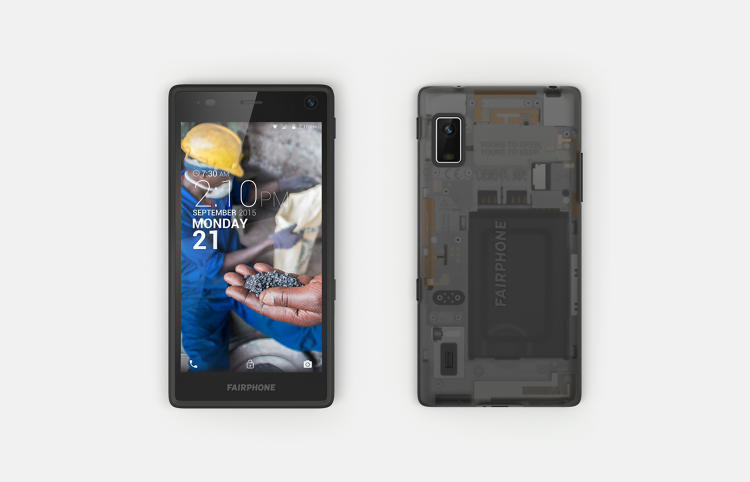 Bas van Abel wanted a phone that worked well enough, but avoided the conflict mineral issues and harsh working practices built into mainstream devices. So two years ago, he created the Fairphone, a phone that would be adequate in its functionality but exemplary in its supply chain.
Since we last spoke to him, he seems to have succeeded. The Dutch company has sold 60,000 units and established a string of direct and traceable relationships with mineral suppliers around the world. Now it’s launching a wholly new version, one that considers not only the phone’s pre-life but its longevity and afterlife as well.
As you can imagine, building a phone from scratch isn’t easy, especially when you have ethical expectations. “We had a lot of people expecting us to kind of create world peace at the same time as making a phone,” Van Abel says. “I felt a little bipolar. Sometimes I felt like dying. At other times, I felt on top of the world.”

