Are you prepared to drink pea milk?| Mashable

Remember when everyone drank milk from cows? Now, the only people who drink animal protein are, like, your parents.

Today people aren’t drinking as much cow’s milk, whether it’s because they have difficulty digesting lactose, they want a healthier alternatives with less fat or, perhaps, a product not associated with a beating heart. As the U.S. market continues to shift towards alternative milks — almond, hemp, coconut, soy and rice — and our meals transition to healthier plant-based diets, the tradeoff is that we risk losing key sources daily protein.

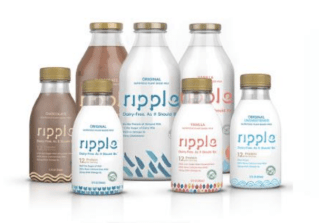
Beginning May 2, every Whole Foods from here to Omaha will stock a new morning drink called Ripple, made from protein pulled from plants. And (phew) it doesn’t taste like grass.

Read More

More Than 13,000 People Are on the Waitlist for This Tiny Pop-up London Restaurant Where You Can Eat Naked | Entrepreneur

More than 13,000  people have signed up to eat at a pop-up eatery in London set to open in June, and the the wait list keeps growing. The restaurant, called The Bunyadi, will serve grilled meats and vegan alternatives on handmade clay plates with edible cutlery by candlelight. Cell phones are not allowed. It’s all very caveman-like.

The goal of the restaurant is to harken back to pre-modern times, giving overstimulated, overwhelmed citizens of our hyper-technological, fast-paced world a chance to reconnect with their more animalistic roots.

Also, clothing is optional.

Read More

Treasury Picks Tubman for $20 Bill, Hamilton to Stay on $10 | Bloomberg

Abolitionist Harriet Tubman will appear on front of the $20 bill, replacing former President Andrew Jackson and becoming the first woman featured on U.S. paper currency in modern times, a Treasury official said, in a design overhaul that will leave Alexander Hamilton on the $10 note.

The decision is the latest chapter in a 10-month-old controversy that erupted after Treasury Secretary Jacob J. Lew tried to address gender imbalance on U.S. currency notes. He opened up the selection process to the public just as the current face on the $10 bill was enjoying a resurgence in popularity, and outrage ensued.

Read More

Save Time and Money With the 80-20 Rule in Marketing |All Business

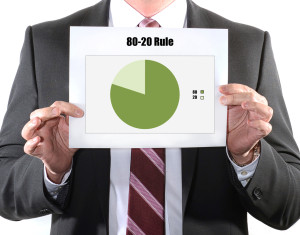
The 80/20 Rule is a potent little principle that can increase your business revenue and make your life easier.

The gist of the 80/20 Rule is that you get 80 percent of your results out of 20 percent of your efforts. For example, 80 percent of your revenue comes from 20 percent of your customers, or 80 percent of your sales comes from 20 percent of your salespeople.

It doesn’t always come out as 80/20. It can be more extreme with 95 percent of the traffic coming from 5 percent of the roads on your commute, or 3 percent of your employees creating 67 percent of the errors. The point is that large results come from small efforts.

Read More

How Gorilla Glass Works | HowStuffWorks

The manufacturing company Corning has developed a product it calls Gorilla Glass. The company designed the glass for our electronic lifestyles. As we carry around computers, tablets, smartphones, MP3 players and other devices, we risk damaging them through everyday use. Corning’s Gorilla Glass stands up to abuse with scratch- and impact-resistant qualities. And Corning’s approach allows the glass to be incredibly thin, meaning it won’t interfere with capacitance touch screens or add significant weight to a device.

Read More

Mitsubishi Motors admits falsifying fuel economy tests | BBC News

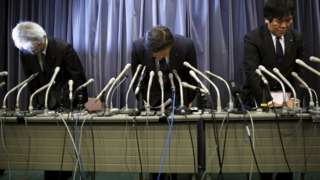
Mitsubishi Motors has admitted falsifying fuel economy data for more than 600,000 vehicles sold in Japan.

Tyre pressure figures were falsified by employees to flatter mileage rates, the company said.

Almost 470,000 vehicles that Mitsubishi made for Nissan were affected and the issue was uncovered after Nissan found inconsistencies.

The announcement sent shares in Mitsubishi down more than 15% in Tokyo.

Read More

The Real Reason AI Won’t Take Over Anytime Soon | Live Science

Artificial intelligence has had its share of ups and downs recently. In what was widely seen as a key milestone for artificial intelligence (AI) researchers, one system beat a former world champion at a mind-bendingly intricate board game. But then, just a week later, a “chatbot” that was designed to learn from its interactions with humans on Twitter had a highly public racist meltdown on the social networking site.

How did this happen, and what does it mean for the dynamic field of AI?

Read More

Stanford Is About to Have the Dopest Map Collection on Earth | WIRED

WHEN YOU VISIT the David Rumsey Map Center at Stanford University’s Green Library, if you can, take the stairs. Yes, you’ll have to spiral up three flights, but the wallpaper will give you plenty of excuses to take a break. Like: a Grand Canyon panorama, a birds-eye view of Manhattan, and a Buddhist world map featuring the imagined spiral of headwaters for the region’s three great rivers high in the Himalayas. There are more, but don’t dally too long. The stairwell is barely a prelude.

The Center itself is classroom-sized, and packed with approximately 150,000 historical cartographic artifacts. Many are stored in wooden cabinets that take up an entire wall. Along the other walls are globes galore, banquet table-sized plats, and massive, many-paneled digital touchscreens capable of calling up millions of megabytes of high-resolution historical maps stored on Stanford’s servers.

Read More

Supreme Court affirms Google Books scans of copyrighted works are fair use | TechCrunch

A Supreme Court order issued today closes the book on (or perhaps merely ends this chapter of) more than a decade of legal warfare between Google and the Authors Guild over the legality of the former’s scanning without permission of millions of copyrighted books. And the final word is: it’s fair use. Related Articles As “Paying The Writer” Gets Easier, Whither Bookstores? Pronoun, A Self-Publishing Platform For Authors, Is Ready To Serve Humanity With Publishing Tools Like These, Who Needs Enemies?

The order is just an item in a long list of other orders that appeared today, and adds nothing to the argument except the tacit approval of the Second Circuit Court of Appeals 2015 decision — itself approving an even earlier decision, that of the U.S. District Court for the Southern District of New York in 2013. So in a way, it’s old news.

Read More

What San Francisco’s Tech Boom Means For Bay Area Real Estate | Forbes

The current state of Bay Area housing bears resemblance to the years leading up to the dotcom bubble in 2000 and the 2008 housing market collapse. At the peak of the housing bubble in 2007, the median sale price for a home in San Francisco was $895,000 while renters were paying just over $2,400 a month on average.

There’s no doubt that the Bay Area real estate market is white-hot once again and it’s largely due to the surging tech industry. Over the last few years, San Francisco has begun looking more and more like Silicon Valley, with companies like Google, Twitter, Airbnb and LinkedIn scooping up office space.

Nine years since the 2007 peak, housing prices, home values and rental rates are once again climbing to unsustainable levels. In 2015, home values jumped by more than 14% and the median sale price, meanwhile, is hovering around $1.1 million.

According to the California Realtors Association’s Housing Affordability Index, just 20% of residents living in the nine Bay Area counties can afford to pay that much for a home. Renters aren’t faring any better, with the median rent for a one-bedroom apartment in San Francisco hitting a whopping $3,490 as of January 2016.

Read More