 v.20 n.16 – Released April 25, 2016
This Week’s Headlines:
- SoCal Home Sales and Median Prices in March
- Events of Interest
- May 10, 2016: San Gabriel Valley Economic Outlook
- June 16-17, 2016: Select L.A. International Investment Summit
v.20 n.16 – Released April 25, 2016
 When a massive ranch in Florida went up for sale 10 years ago, on a piece of land five times the size of Manhattan, the owners had offers from buyers around the world. But instead of selling to the highest bidder, they chose a developer that would preserve most of the land—and turn the rest into what’s attempting to be the most sustainable new town in the United States.
“We came to them and we said, look, we want to preserve as much of this as possible, and then create the most sustainable new town that has really ever been attempted,” says Syd Kitson, chairman and CEO of Kitson and Partners, the developer of the new town, called Babcock Ranch.
After a decade of planning, the town is now under construction. Florida Power & Light, the local utility, is building a huge new solar farm on the property—with 350,000 solar panels—which will power the entire community of 50,000 people.
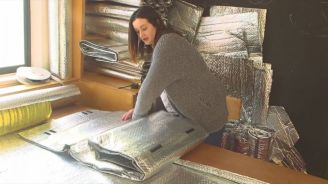 “Sometimes you just look at something and wonder, ‘Could this be better?’”
That was teen Emily Duffy’s question when she started thinking about the living conditions of the homeless.
After researching the issue, then at age 15, the Irish schoolgirl in Limerick decided to create a high-tech sleeping bag for the homeless.
A year after she first thought of the idea, the bag is now being made by homeless men in Dublin, in a workshop designed to help them get back into the workforce.
Read More
 Google has always been known to safeguard its applications to thwart anyone from using them for fraudulent activities. Recent developments in this regard have had Google defending its ad systems to prevent something known as clickjacking.
What is Clickjacking?
Clickjacking has emerged as a recent threat to cost-per-click display ads. Clickjacking, also known as a “UI redress attack,” where the appearance of a website is changed so that a victim does not realize they are taking an important action, in this case clicking on one or more ads.
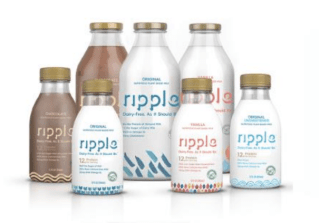 Remember when everyone drank milk from cows? Now, the only people who drink animal protein are, like, your parents.
Today people aren’t drinking as much cow’s milk, whether it’s because they have difficulty digesting lactose, they want a healthier alternatives with less fat or, perhaps, a product not associated with a beating heart. As the U.S. market continues to shift towards alternative milks — almond, hemp, coconut, soy and rice — and our meals transition to healthier plant-based diets, the tradeoff is that we risk losing key sources daily protein.
Beginning May 2, every Whole Foods from here to Omaha will stock a new morning drink called Ripple, made from protein pulled from plants. And (phew) it doesn’t taste like grass.
 More than 13,000 people have signed up to eat at a pop-up eatery in London set to open in June, and the the wait list keeps growing. The restaurant, called The Bunyadi, will serve grilled meats and vegan alternatives on handmade clay plates with edible cutlery by candlelight. Cell phones are not allowed. It’s all very caveman-like.
The goal of the restaurant is to harken back to pre-modern times, giving overstimulated, overwhelmed citizens of our hyper-technological, fast-paced world a chance to reconnect with their more animalistic roots.
Also, clothing is optional.
 Abolitionist Harriet Tubman will appear on front of the $20 bill, replacing former President Andrew Jackson and becoming the first woman featured on U.S. paper currency in modern times, a Treasury official said, in a design overhaul that will leave Alexander Hamilton on the $10 note.
The decision is the latest chapter in a 10-month-old controversy that erupted after Treasury Secretary Jacob J. Lew tried to address gender imbalance on U.S. currency notes. He opened up the selection process to the public just as the current face on the $10 bill was enjoying a resurgence in popularity, and outrage ensued.
 The 80/20 Rule is a potent little principle that can increase your business revenue and make your life easier.
The gist of the 80/20 Rule is that you get 80 percent of your results out of 20 percent of your efforts. For example, 80 percent of your revenue comes from 20 percent of your customers, or 80 percent of your sales comes from 20 percent of your salespeople.
It doesn’t always come out as 80/20. It can be more extreme with 95 percent of the traffic coming from 5 percent of the roads on your commute, or 3 percent of your employees creating 67 percent of the errors. The point is that large results come from small efforts.
 The manufacturing company Corning has developed a product it calls Gorilla Glass. The company designed the glass for our electronic lifestyles. As we carry around computers, tablets, smartphones, MP3 players and other devices, we risk damaging them through everyday use. Corning’s Gorilla Glass stands up to abuse with scratch- and impact-resistant qualities. And Corning’s approach allows the glass to be incredibly thin, meaning it won’t interfere with capacitance touch screens or add significant weight to a device.
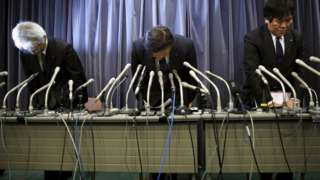 Mitsubishi Motors has admitted falsifying fuel economy data for more than 600,000 vehicles sold in Japan.
Tyre pressure figures were falsified by employees to flatter mileage rates, the company said.
Almost 470,000 vehicles that Mitsubishi made for Nissan were affected and the issue was uncovered after Nissan found inconsistencies.
The announcement sent shares in Mitsubishi down more than 15% in Tokyo.

