How to Balance Work and Family Life: 12 Proven Strategies for Working Parents | LifeHack

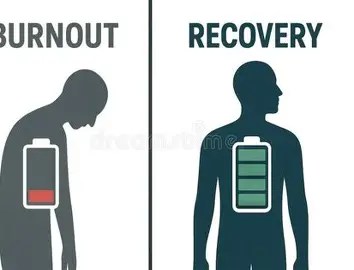
Last Tuesday, I found myself typing an email during my son’s soccer game. Again. The moment I hit send, he scored his first goal of the season—and I missed it. That gut punch? It’s the same one millions of parents feel daily as we juggle demanding careers with family life. The mythical “work-life balance” feels more like a circus act where we’re constantly dropping balls.

Here’s the thing nobody tells you: perfect balance doesn’t exist. Research shows that 66% of working parents experience significant stress trying to manage both domains. But what if we’re approaching this all wrong? What if instead of seeking balance—that elusive state where everything gets equal attention—we aimed for something more realistic?

Source: How to Balance Work and Family Life: 12 Proven Strategies for Working Parents – LifeHack

Why Life Feels Like Constant Problem-Solving (And How to Actually Chill) | LifeHack

Living means having needs. And having needs means there’s always a gap between “how things are” and “how we want them to be.” Closing those gaps? That’s literally problem-solving. You’re hungry, so you need food. You’re tired but have work tomorrow, so you need to balance rest and responsibility. Your phone battery is dying, your inbox is full, your friend needs help moving, and you haven’t figured out dinner yet.

Every single one of these is a problem, which means your brain is constantly in problem-solving mode. This isn’t a bug—it’s a feature of being alive. But here’s the good news: while you can’t eliminate all problems, you absolutely can learn to chill more reliably. I will explain why life feels this way and give you practical strategies to reduce needless stress without becoming irresponsible or checking out.

Read More

Trump’s anti-EV rules aren’t stopping California’s electric truck boom—yet | Fast Company

Wes Lowe uses so much Claritin that he started an Amazon subscription to avoid running out. His kids take two asthma medications. This reflects the normalcy of pollution in California’s San Joaquin Valley, where residents breathe some of the dirtiest air in the nation.

Lowe lives about 20 miles outside of Fresno, in the valley’s heart. More than a dozen highways, including Interstate 5, run through the region, carrying almost half of the state’s truck traffic. The sky is usually hazy, the air is often deemed hazardous, and 1 in 6 children live with asthma. “You don’t realize how bad it is until you leave,” Lowe said.

Read More

What carbon capture is and why it’s not an ideal climate solution | Fast Company

Power plants and industrial facilities that emit carbon dioxide, the primary driver of global warming, are hopeful that Congress will keep tax credits for capturing the gas and storing it deep underground.

The process, called carbon capture and sequestration, is seen by many as an important way to reduce pollution during a transition to renewable energy.

But it faces criticism from some conservatives, who say it is expensive and unnecessary, and from environmentalists, who say it has consistently failed to capture as much pollution as promised and is simply a way for producers of fossil fuels like oil, gas, and coal to continue their use.

Read More

Clover vs Square: A Thorough Comparison for 2026 | Business

There’s no such thing as making it “too easy” to accept credit cards and other customer payments. That’s why choosing the best credit card processor is crucial to running a business. Clover and Square are top-notch payment processors with competitive rates and a range of features that will appeal to various businesses’ needs. Both companies provide essential functions, like merchant cash advances and customer management functionality. However, each company has specific advantages that cater to some businesses better than others. We’ll compare the offerings from Clover and Square to help you choose the best credit card processor for your organization.

Who is Clover For?

Clover is an excellent credit card processor for new businesses and any small business that wants a one-stop shop for payment processing and point-of-sale (POS) system functionality. The company provides hardware that’s compliant with industry security standards and software designed to help businesses with payment processing.

We appreciate that Clover delivers fast payment processing speeds, an intuitive user interface and easy implementation. You can accept credit cards and digital payments, handle product returns, manage inventory, facilitate tipping, create customer loyalty programs and generate insightful reports.

Read More

Samsung’s wireless power bank tries to fill the magnetic charging gap on the Galaxy S26 | Digital Trends

Samsung has launched its first magnetic wireless power bank. Dubbed the Magnet Wireless Battery Pack, the device is specifically designed to address the Galaxy S26’s lack of built-in magnets, a gap that is quite frustrating for users, especially those who prefer wireless charging.

Talking about the power bank’s specifications first, it sports a 5,000 mAh battery that delivers up to 15W wireless or 25W wired charging via USB-C. You can use it to charge two devices at once, but I sincerely don’t recommend doing that, especially if you’re looking for complete recharges rather than quick top-ups.

Read More

Best Upcoming Foreign Markets For Business Investment | The Startup Magazine

If you own a business and are looking to invest in a foreign market, you need to know which ones are worth your time. Otherwise, it can be a complete waste of money as you try to establish your presence in a country or region that will never deliver long-term results.

Before you see our list of the best upcoming foreign markets for business investment, keep in mind that the best place for you will likely revolve around your business and what it does. Some countries are far better for investment in certain business sectors than others, so always be aware of that.

Middle East

The Middle East has been a rapidly growing foreign market for the last couple of decades, and two particular countries stand out right now: the UAE and Syria.

The United Arab Emirates is a huge hub of activity with very business-friendly policies and access to other markets all over the world. It’s a great place to set up shop and start a business, particularly if you’re involved in fintech and green energy.

Read More

Why Smart Entrepreneurs Watch the Numbers | The Startup Magazine

There’s a bit of a tendency to think that successful entrepreneurs go mostly by instinct, confidence, and a few big ideas thrown in, and although those things do absolutely play a role, they’re not usually what keeps a business going for the long term. In fact, if you want a long-lasting business, the one thing you’ve definitely got to do is watch the numbers – get those right and the rest should fall into place. With that in mind, keep reading to find out more about financial diligence.

Revenue Is Only Part Of The Story

Revenue is generally the part of the business people can see, and it’s also the one that feels the most rewarding to track, but the truth is that revenue on its own doesn’t tell you whether the business is healthy, and what matters just as much is how much of that revenue is still there once all the expenses are accounted for, and whether those expenses are rising (perhaps without anyone noticing).

For example, if advertising costs increase, or supplier fees edge up, or operational costs creep higher month after month, your revenue can still grow, but your margins might be shrinking at the same time, and that’s the kind of situation that leaves business owners confused because things are tighter than they should be – as far as they’re aware, anyway. But entrepreneurs who review their financial data on a regular basis are far more likely to catch those changes early on, so they’ll be able to adjust pricing, renegotiate contracts, or cut back on spending before it all becomes a much bigger issue.

Read More

Why Transferable Skills Are a Game-Changer in Startups Today | Entrepreneur

Key Takeaways

  • Founders who shift across sectors succeed not because they master the new field before entering it, but because they bring core execution skills that translate across domains.
  • What once took a decade can now happen in a few years, thanks to open-source tools, AI assistants, the rise of low-code/no-code tooling, and community-driven knowledge sharing.
  • A well-capitalized team with access to fractional experts, growth advisors, and async tools can often scale up knowledge significantly faster.
  • The modern operator’s advantage isn’t necessarily in how long they’ve been in a field. It’s how fast they can apply lessons from one domain to another.

The idea that it takes a decade to master a craft has roots in research from psychologists like Anders Ericsson, whose studies formed the foundation of the “10,000-hour rule.” But in today’s tech economy, accelerated by access to information, open-source tools, and AI-enabled workflows, the timeline for building meaningful expertise is no longer so fixed. What used to take 10 years can, in some cases, happen in three. And in other cases, it still takes ten, but not for the reasons we once assumed.

Read more

Here Are the Toughest Jobs in America — Is Yours on the List? | Entrepreneur

Key Takeaways

Firefighters, construction workers, and doctors top Americans’ list of the “toughest” jobs.

According to a new survey, respondents associated tough jobs with constant physical strain, long hours, and exposure to extreme environments.

Trade and manual jobs were seen as significantly tougher than non-trade jobs.

Firefighters, cops and construction workers dominate Americans’ mental picture of “tough jobs,” according to a new survey.

A poll of 2,000 employed adults from January 26 to February 2, commissioned by Cat Footwear, asked which roles count as the “toughest.” The results highlighted a mix of emergency responders, trades, and care workers. Firefighters ranked as the hardest job in America, followed by police officers, construction workers, miners and oil workers, nurses, paramedics, and agricultural workers.

Doctors, caregivers, and other healthcare roles round out the top tier, showing how much respondents associated toughness with both physical and emotional strain.

Read More