Driverless, Electric Taxis Could Reduce Emissions By 94% | Fastco.Exist

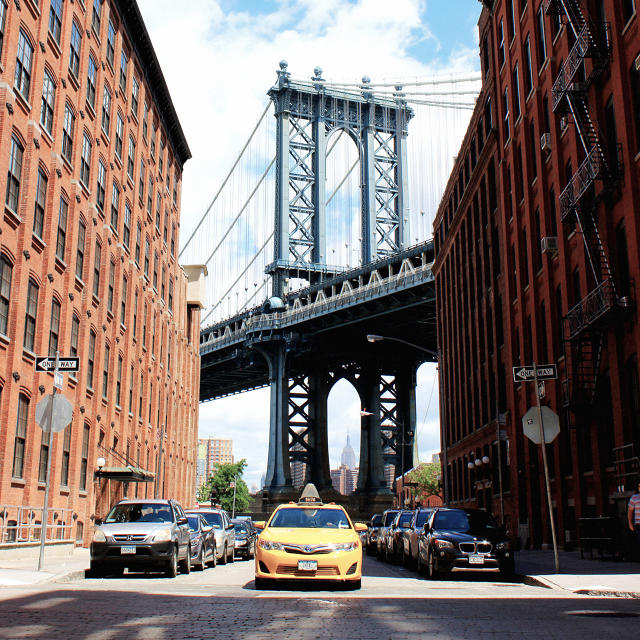
3048294-inline-i-1-driverless-taxis-would-reduce-emissions-by-94Human drivers are woefully inefficient, stabbing the gas and the brakes all the time instead of grooving into a smooth cruise. Efficiency improves further when the cars route themselves as a group, like human drivers can do today with services like Waze, which give directions based on road and traffic conditions to avoid congestion.

Add to that cutting emissions by going electric, and you can see how a new study from Lawrence Berkeley National Laboratory would find that robot cars, powered from a central grid, could reduce taxi emissions by 94% compared to today’s gas-powered, human-steered cabs.

Read More.

Time Warner Cable Ordered to Pay Texas Woman Nearly $230,000 for ‘Egregious’ Robocalling | Entrepreneur

Time Warner Cable is giving Comcast — which once changed a customer’s billing moniker to ‘Asshole Brown’ and berated another user for simply wanting to disconnect — a run for its money in the belligerent customer service department.

A federal judge just ordered that Time Warner must pay Texas resident Araceli King $229,500 for harassing her with 153 robocalls over the course of a year, ABC News reports.

In her original suit, King only sought statutory damages of $81,500. But given that the calls persisted even after King complained that Time Warner was calling the wrong number, and even after she filed suit, the judge called the company’s behavior “particularly egregious.” He found Time Warner in violation of the Telephone Consumer Protection Act, which states that companies can’t robocall personal cell phones without consent, and awarded King the maximum fine of precisely $1,500 per call.

via Read More.

California Farms Are Using Drilling Wastewater to Grow Crops | Bloomberg Business

California’s epic drought is pushing Big Oil to solve a problem it’s struggled with for decades: what to do with the billions of gallons of wastewater that gush out of wells every year.

Golden State drillers have pumped much of that liquid back underground into disposal wells. Now, amid a four-year dry spell, more companies are looking to recycle their water or sell it to parched farms as the industry tries to get ahead of environmental lawsuits and new regulations.

The trend could have implications for oil patches across the country. With fracking boosting the industry’s thirst for water, companies have run into conflicts from Texas to Colorado to Pennsylvania. California could be an incubator for conservation efforts that have so far failed to gain traction elsewhere in the U.S.

Read More.

PayPal Will Change User Agreement After Robocall Concerns | Small Biz Trends

PayPal recently came under fire for possibly violating the FCC’s robocall policies.

The new User Agreement, which was set to go live on July 1, indicated that the company intends to robocall and text users on any number they have from them, possibly even ones that are not associated with their account.

The purposes of these texts and calls are varied and could include marketing.

Consumer advocacy groups pointed out that the new agreement seemed to say that users must agree to let the company send automated surveys, offers and promotions, without the ability to opt-out. There was not clear wording on whether or not the users who disagreed would have to stop using the company’s services.

Read More.

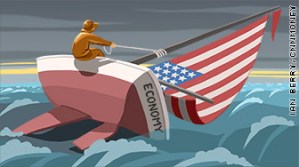
China stocks hammered as market crash continues | CNN Money

China stocks plunged again on Wednesday, even as regulators worked to contain a crisis that has wiped trillions of dollars off the country’s stock markets.

The Shanghai Composite plunged 8% at the market open on Wednesday, and spent the entire day in negative territory before closing down 5.9%. The vast majority of stocks listed on the benchmark index shed 10%, the maximum limit shares are allowed to fall before being halted.

The smaller Shenzhen Composite lost 2.5%, while Hong Kong’s Hang Seng dropped 5.8%.

“At the moment there is a mood of panic in the market and a large increase in irrational dumping of shares, causing a strain of liquidity in the stock market,” China Securities Regulatory Commission said in statement.

Since June 12, the Shanghai Composite has lost an unnerving 32%. The Shenzhen market, which has more tech companies and is often compared to America’s Nasdaq index, is down 41% over the same period.

Read More.

What’s wrong with the lean startup methodology? | TNW News

I wholeheartedly agree and believe this to be true whether your product is digital or physical. The drive for immediacy and minimalism can paralyse creativity, this is especially true to products driven by art such as clothing. When a woman buys a £2,000 dress from Mary Katrantzou, she is not just buying a piece of clothing, she is buying into the artistic vision of the designer.

Read More.

Macy’s cuts ties with Donald Trump over Mexico comments | BBC News

US retailer Macy’s has ended its relationship with Donald Trump after the businessman and presidential candidate made controversial remarks about Mexican immigrants.

The retailer has sold Trump-branded clothes since 2004 and Mr Trump has appeared in the company’s commercials.

Macy’s is the latest company to distance itself from the businessman.

TV networks NBC and Univision said they would not air the Miss USA pageant, which is co-owned by Mr Trump.

“We have no tolerance for discrimination in any form,” Macy’s said in a statement. “We welcome all customers, and respect for the dignity of all people is a cornerstone of our culture.”

In response, Mr Trump said his principles were more valuable than the clothing line, which he called a “small business in terms of dollar volume”.

Read More.

This Desktop Farm Is Like A 3-D Printer For Fresh, Natural Food | Co.Exist

3047980-inline-i-1-this-desktop-farm-is-like-a-3-d-printer-for-foodYou could mistake Caleb Harper’s Personal Food Computer for a 3-D printer. The desktop-sized plastic box is a cut down version of his CityFarm, and designed to grow fresh vegetables anywhere, without soil.

The Personal Food Computer is a tiny aeroponics system, a miniature farm that creates its own weather, and supplies nutrients to the plants’ roots by misting them with water. Coupled with monitors that track things like CO2, light levels and humidity, the box can be dropped anywhere, and grow fresh food, regardless of surrounding conditions.

The water-sipping properties of aeroponics seem especially relevant in these times of drought, but this decentralization also means less long-distance transport, and — in a possible future — less environmental pressure from large farms.

Read More.