The Couple Who Quit Their Ad Jobs to Travel the World Ended Up Poor and Scrubbing Toilets | Adweek

You remember Chanel Cartell and Stevo Dirnberger, the South African couple who quit their agency jobs this year to travel the world and document the experience. It sounded like a dream, and the lovely Instagram photos have made it look like one.

But halfway through their year-long odyssey (they’re currently in Athens, having traveled 25,000 kilometers so far), they’ve posted a reality check on their blog—a post titled “Why We Quit Our Jobs In Advertising To Scrub Toilets”—in which they share “the uglier side of our trip.” It turns out that following one’s dream—while working odd jobs in exchange for room and board—involves a lot of dirty work, and more than a few tears.

“The budget is really tight, and we are definitely forced to use creativity (and small pep talks) to solve most of our problems (and the mild crying fits),” Cartell writes. “Don’t let the bank of gorgeous photography fool you. Nuh uh. So far, I think we’ve tallied 135 toilets scrubbed, 250 kilos of cow dung spread, 2 tons of rocks shoveled, 60 meters of pathway laid, 57 beds made, and I cannot even remember how many wine glasses we’ve polished.

Read More

How India’s ‘Garden City’ Is Igniting the Entrepreneurial Spirit | Inc.com

getty_186255464_64850Often referred to as the “Silicon Plateau,” Bangalore holds many nicknames.

The green, sprawling capital city of Karnataka, a state in the southwestern region of India, is situated beneath a towering, 2,600-foot tall rock formation called the Mysore Plateau, which is bounded by the Sahyadri mountains and the sloping Kaveri river.

Over the past few years, Bangalore has earned the mantle of India’s “Silicon Valley.”

Although historically an outsourcing hub, the city is becoming its own technology business center. In 1909, the first Indian Institute of Science was established in Bangalore, and today it counts 3,500 students. The school’s most renowned education centers for climate change, neuroscience, and engineering have spurred more interdisciplinary research.

Today, Bangalore ranks as the 15th hottest startup ecosystem in the world, according to a recent report from Crunchbase and research firm Compass. The metropolis counts around 4,900 active startups, with nearly $2.3 billion in company investments last year.

A wide range of startup activity is happening in Bangalore. Internet penetration throughout India, especially, presents many opportunities for digital entrepreneurs. The country’s current population is a staggering 1.3 billion, and a July report from the Internet and Mobile Association of India projects that the country will count 500 million Internet users by 2017.

Read More

Subway is getting a makeover | Business Insider

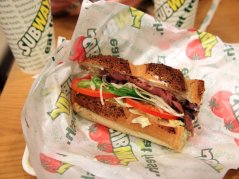
Subway is about to get a big makeover.   The sandwich chain, which has recently been plagued by declining sales and a scandal involving its former spokesman Jared Fogle, will undergo its first brand overhaul in seven years, reports Josh Kosman at The New York Post.  Subway’s US sales last year fell by 3%, the most of any of the top 25 fast-food chains, Drew Harwell reports at The Washington Post. Subway also fell two spots to become the third-most-popular fast-food restaurant for the first time in seven years. Here are the changes Subway is considering.

Read More

Mount McKinley’s Alaska name Denali is restored by Obama | BBC News

After decades of controversy, the name of Mount McKinley, the tallest mountain in North America, has been changed back to its original native Alaskan, Denali. Denali translates as High One or Great One and is used widely by locals. The 20,237ft (6,168m) peak was named by a gold prospector in 1896 after he heard that William McKinley had been nominated to become the US president. US President Barack Obama announced the change ahead of a three-day visit to Alaska to highlight climate change.

Read More

Kraft: Warren Buffett, 3G Capital May Push Cost-Cutting |Bloomberg Business

For decades, Kraft and other food behemoths offered convenience, comfort, and the promise of a modern lifestyle. But the compound annual growth rate of the packaged food industry in North America has been less than 1 percent for almost 10 years, with Big Food losing market share to smaller, healthier brands. Venerable Kraft Foods—whose Singles are a “processed cheese product,” and whose Cool Whip didn’t contain milk or cream until five years ago—has lost revenue for the past three years. “Now these big food brands are old-fashioned,” says Bob Goldin, chief executive officer at researcher Technomic. “Consumers don’t see them as relevant.”

But investors, well, that’s a different matter. Warren Buffett—who drinks Coke at breakfast and says he eats like a 6-year-old—teamed up with 3G Capital, the private equity firm founded by some of Brazil’s wealthiest men and known for its penny-pinching ways at Anheuser-Busch InBev and Burger King, to buy ketchup maker Heinz in 2013. In July, Heinz closed on its purchase of Kraft, with Buffett’s Berkshire Hathaway and 3G owning a 51 percent stake. Kraft Heinz instantly became the third-largest food company in North America, with global sales of $29 billion last year. The good news is it’s composed of big, profitable brands. The bad: They have little potential to grow. “What can they do with these brands?” says Bloomberg Intelligence analyst Kenneth Shea. “They’ll do the best they can, but mostly they’ll cut costs.”

Read More

U.S. Sees Big Spike in Black and Hispanic Women Entrepreneurs | Money Cnn

When it comes to small business in the United States, more women are running the show.

On Wednesday, the National Women’s Business Council released an analysis of preliminary Census data which showed there were nearly 10 million women-owned small businesses in the U.S. in 2012, a 27.5% increase from 2007. (The Census defines a woman-owned business as one where a woman owns 51% or more of the business equity or stock).

While men still own more businesses than women, women-owned businesses grew at a rate of four times that of male-owned businesses. In 2012, men owned nearly 15 million businesses.

Overall, women-owned businesses earned a total of $1.6 trillion between 2007 and 2012 and the vast majority (89.4%) were run by sole proprietors, meaning the only employee was the owner.

The report, which pulled data from the Census’s Survey of Small Business Owners, also highlighted major increases in small business ownership among women of color, particularly black and Hispanic women.

Read More.

No Humans Allowed! Test ‘City’ for Driverless Cars Opens | Live Science

Imagine a town with crosswalks but no pedestrians, cars and trucks but no drivers. Welcome to Mcity, a fake “town” built by researchers who are testing out the driverless cars of the future.

The controlled test environment, which opened today (July 20) at the University of Michigan (U-M) in Ann Arbor, covers 32 acres (the size of about 24 football fields) and contains all the trappings of a real suburb or small city. There is an entire network of roads lined with sidewalks, streetlights, stop signs and traffic signals. There’s even a “downtown” area complete with fake building facades and outdoor dining areas.

Read More.

Huh? Schools Think Kids Don’t Want to Learn Computer Science | WIRED

TIMES HAVE NEVER been better for computer science workers. Jobs in computing are growing at twice the national rate of other types of jobs. By 2020, according to the Bureau of Labor Statistics, there will be 1 million more computer science-related jobs than graduating students qualified to fill them.

If any company has a vested interest in cultivating a strong talent pool of computer scientists, it’s Google. So the search giant set out to learn why students in the US aren’t being prepared to bridge the talent deficit. In a big survey conducted with Gallup and released today, Google found a range of dysfunctional reasons more K-12 students aren’t learning computer science skills. Perhaps the most surprising: schools don’t think the demand from parents and students is there.

Read More.

Why people are pissed about what Spotify is doing to their phones | Mashable

A new privacy policy from Spotify introduced with little fanfare has sparked a backlash against the streaming music service, prompting an apology and clarification from the company CEO.

Earlier this week, Spotify quietly announced that it plans to begin looking through your phone, tracking your location and even following your activity on Facebook in an effort to provide a more personalized experience.

Those new data collection efforts have already pushed some users to cancel their accounts, including Minecraft creator Markus Persson — whose searing objection to the new privacy policy even drew a response from Spotify CEO Daniel Ek.

Read More.