Nevada Says It Will Treat Daily Fantasy Sports Sites as Gambling | The New York Times

Nevada regulators ruled on Thursday that playing daily fantasy sports should be considered gambling, not a game of skill, and ordered websites like DraftKings and FanDuel to stop operating immediately in the state until the companies and their employees receive state gambling licenses.

It is perhaps the most significant setback yet for a booming, unregulated industry that has spent the past two weeks in the midst of allegations that have prompted federal and state investigations into whether its employees, armed with inside information, exploited paying customers.

2015 DraftKings and FanDuel, each valued at more than $1 billion, have operated under an exemption to the Unlawful Internet Gambling Enforcement Act of 2006, which outlawed online poker and sports betting. Five states have prohibited them from operating, but none are as powerful and influential as Nevada, which has long been a bastion of legal gambling, operates under strict regulation, and has the nation’s only active sports betting.

Read More

US Factory Output Drops in Latest Sign of Weak Growth | ABC News

downloadU.S. manufacturing production fell for the second straight month in September as factories cranked out fewer appliances, computers, and electronics.

Factory output declined 0.1 percent, the Federal Reserve said Friday, following a drop of 0.4 percent in August. Manufacturers also cut back on production of steel and other metals.

The decline suggests that a strong dollar, weak overseas economies, and cautious U.S. consumers are holding back factory output. Many companies are also focused on reducing stockpiles that were built up in the spring by cutting back on orders for new goods.

Overall industrial production, which includes mining and utilities, fell 0.2 percent, also its second straight decline. Mining output plunged 2 percent as energy companies sharply reduced oil and gas drilling. Utility output rose 1.3 percent.

Read More

VW to recall 8.5m diesel cars across Europe | The Guardian

Volkswagen is to recall 8.5m diesel cars across the European Union in the wake of the emissions scandal.

The full extent of the work required by the manufacturer to deal with the defeat devices in its diesel vehicles became apparent on Thursday after German authorities rejected its proposals for a voluntary scheme.

Germany’s Federal Motor Transport Authority ordered a compulsory recall of all the affected 2.4m Volkswagen cars in the country, triggering the EU-wide move by VW across 28 member states.

It means that all 1.2m vehicles affected by the scandal in the UK will also be formally recalled.

Volkswagen said it welcomed the German decision, which would “give customers clarity with regard to the continued unrestricted use of the vehicles”.

Read More

From Teens to Adults, Everyone’s Now Watching Online Video as Much as TV | Adweek

Globally, people are spending as much time watching online video as they spend watching TV, according to a new report from Millward Brown. That should bode well for brands trying to target cord-cutters or “cord-nevers,” but digital promos annoy many viewers.

For Millward Brown’s study, “AdReaction: Video Creative in a Digital World,” the research firm polled more than 13,500 multiscreen viewers—i.e., people who own a TV and either a smartphone or tablet—in 42 countries on what they think about video advertising.

The average consumer between the ages of 16 and 45 watches 204 minutes of video a day, split equally between TV and online. Forty-five minutes of the average online viewing time is done on a smartphone, while desktop accounts for 37 minutes and tablet for 20 minutes

Read More

The Biggest Beer Deal Ever Could Threaten Real Craft Brews | WIRED

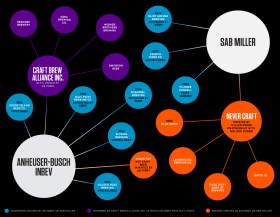
IT’S BEEN A busy year for beer and things are coming to (ahem) a head this week.

After months of dickering, the world’s largest beer maker, Anheuser-Busch InBev, is buying the world’s second-largest beer maker, SABMiller for about $104 billion. That’s greater than the GDP of Ecuador and the single biggest deal in the history of beer. Assuming the deal clears all the regulatory hurdles, the new company would own about one of every three beers in the world, not to mention fat stacks of capital and unprecedented access to supply and distribution chains.

And that’s making a lot of small-time brewers and craft beer purists very nervous.

Read More

Airlines told to advise passengers against packing extra batteries | Mashable

Lithium batteries and airplanes don’t get along very well.

The U.S. government is strongly urging airlines to tell passengers not to pack spare lithium batteries in checked luggage because they can ignite and fuel fires in baggage compartments.

Batteries have been the culprit in an increasing number of incidents. Most recently, an Alaska Airlines flight had to make an emergency landing Buffalo when a credit card reader began smoking.

Aircraft manufacturers have warned about large shipments of batteries in a plane’s cargo, but the Federal Aviation Administration’s warning takes it further.

Read More

Apple Could Pay Up To $862 Million After Losing Patent Lawsuit | Forbes

Apple AAPL latest hurdle in the world of patent disputes could blow a small hole in its $200 billion cash mountain.

A U.S. federal jury has ruled that Apple used technology owned by the licensing arm of the University of Wisconsin on some of the chips that found their way into recent iPads and iPhones.

The jury has yet to decide on damages but the University has been seeking as much as $862 million for patent infringement.

The University filed the patent in 1998, for technology that could enhance the efficiency of computer processors.

It sued Intel INTC for infringing on the same patent in 2008, and settled out of court with the company before it could go trial. Intel ended up paying the University a $110 million lump sum to license the patent, court documents show.

Read More

Ice Age Mammoth Bones Discovered on Michigan Farm | Live Science

Two Michigan farmers made an unexpected discovery in a wheat field last week: the ice-age bones of a mammoth that was likely slaughtered by ancient humans.

An excavation and analysis of the bones suggest they come from an adult male mammoth that had an unlucky end.

“We think that humans were here and may have butchered and stashed the meat [in a pond] so that they could come back later for it,” Daniel Fisher, a Universityof Michigan paleontologist who led the excavation, said in a statement. Once researchers date the bones, the discovery may help determine when early humans lived in the area, Fisher said.

Read More

Dell Buys EMC For $67B In Largest Deal In Tech History | TechCrunch

In  the largest tech deal in history by far, Dell and partners MSD Partners and Silver Lake agreed to buy EMC today for $67 billion or $33.15 a share.

This is way over the $27 price being rumored last week, and makes the deal far larger than the $37 billion that Avago paid for Broadcom just last May. What makes this deal even more interesting is that Dell with a valuation of around $25 billion was by far the smaller fish at approximately half the size of EMC.

The biggest part of EMC by far is VMware, which was included in the deal and will continue to be a separately publicly traded company, but EMC will go private and become part of Dell ending the company’s long history as a publicly traded company.

The two combined companies will make the Dell and EMC the world’s largest privately controlled, integrated technology company, according to a statement released by EMC.

Read More

LinkedIn switching to ‘discretionary’ vacation policy | Cnn Money

LinkedIn is the latest company to offer an open-ended time off policy to its employees.

The networking site is implementing a “discretionary time off,” or DTO policy, for its U.S.-based employees, LinkedIn (LNKD, Tech30) vice president Pat Wadors said in a blog post.

Starting November 1, the company will no longer offer a set number of days off each year. Instead, managers will work with employees to plan vacation time.

Under the new policy, LinkedIn employees will face “no set minimum or maximum amount of vacation time,” Wadors wrote.

“We are not alone in making this shift to DTO. It’s part of a growing movement to place more focus on results and empowerment, not hours worked,” Wadors wrote. “And it’s an important step to help employees recharge and keep engaged.”

The unlimited vacation model got its start at small tech firms, and a couple of major employers including Virgin (VA) and General Electric (GE) have adopted it over the past year.

The shift has caused bumps in some workplaces.

Read More