Lambda School’s For-Profit Plan to Solve Student Debt | WIRED

Early this summer, tech entrepreneur Austen Allred was on Reddit, as he often is, when he noticed something suspicious. The coding forums he frequents, where people usually talk about JavaScript bugs and command line functions, were being suffocated by rants and raves on a particular topic: a coding bootcamp called Lambda School, which Allred happens to run.

To Allred, the posts looked suspiciously robotic. Perhaps a competitor was posting spam to get any mention of Lambda banned from the forums. Maybe it was a bootcamp critic on a tear. Allred had heard that people were spreading rumors he was behind the accounts, trying to gin up more exposure, good or bad, for his startup. “People want us to fail,” he says, casting a glance from under the brim of his signature grey and red trucker hat, emblazoned with the eponymous Greek letter. “People want to think that Lambda is a scam, because they want to believe the results we’re producing are impossible.”

Read More

Should You Start a Business Without a College Degree? | Business News Daily

Entrepreneurship can be a great way to financial freedom, but building a successful business takes a lot of time, hard work and perseverance. Many young workers are left wondering when they should start a business and what education is required to do so.

A college degree is not required to start a business, but it certainly helps. College not only teaches students educational topics that can be helpful in starting a business, but also soft skills, like how to be lifelong learners.

Read More

Twitter blocks state-run media ads after Hong Kong discord | Fast Company

Leadership at Twitter stated today that they want to “protect healthy discourse and open conversation.” To that end, they are no longer accepting advertising from state-controlled news media entities. This comes on the heels their discovery of 936 accounts inside China that were “deliberately and specifically attempting to sow political discord in Hong Kong, including undermining the legitimacy and political positions of the protest movement on the ground.”

Read More

YouTube: LGBT video-makers sue claiming discrimination | BBC News

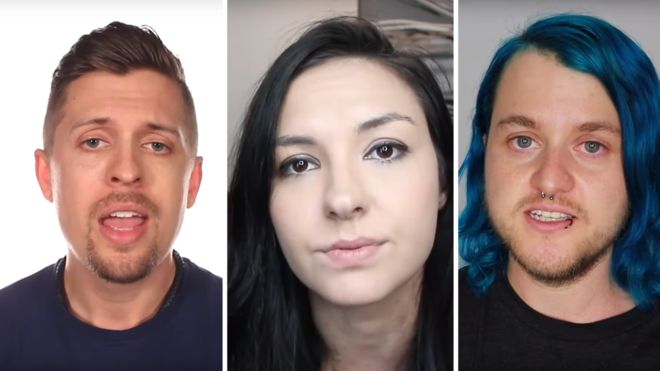
A group of YouTube video-makers is suing it and parent company Google, claiming both discriminate against LGBT-themed videos and their creators.

The group claims YouTube restricts advertising on LGBT videos and limits their reach and discoverability.

But YouTube said sexual orientation and gender identity played no role in deciding whether videos could earn ad revenue or appear in search results.

A group is hoping a jury will hear its case in California.

Read More

ZeroAvia Is on a Mission to Cut Pollution by Fueling the Worst-Polluting Planes in the Sky With Hydrogen | Inc.com

As a champion of clean energy, Valery Miftakhov found himself on a self-inflicted guilt trip when he was piloting small planes and helicopters. The Siberian-born, Princeton- and Stanford- educated physicist became fascinated with clean transportation and clean fuel while living in Silicon Valley and witnessing the emergence of Tesla and a technical focus on decarbonization.

Having already created a company that made electric vehicles more efficient to charge–and landed a spot on Inc.’s annual ranking of the fastest-growing private companies in the U.S. in 2017–he’s turning his eyes to the skies with another startup, ZeroAvia. “With land transport rapidly decarbonizing, air transport is quickly becoming the leading emission source, so we must find ways to make aviation more sustainable,” says Miftakhov, who will serve as ZeroAvia’s CEO.

Read More

Venmo launches instant transfers to bank accounts | TechCrunch

PayPal -owned payments app Venmo today announced support for instant transfers to U.S. bank accounts. The feature is an optional alternative to Venmo’s standard bank transfer service, which typically takes one to three business days to process transactions. With Instant Transfer, however, funds from your Venmo account can hit your bank account within minutes.

As of January 2018, Venmo has offered Instant Transfers to eligible Visa and Mastercard debit cards for a small fee. At launch, the fee was a flat $0.25, but Venmo bumped it up to 1% of the transferred amount last October. Now, the minimum fee is $0.25 and the maximum fee is $10. Of course, users can still choose the standard transfer option if they don’t want to pay for the convenience of instant payments.

Read More

Ebola Is Now Curable. Here’s How the New Treatments Work | WIRED

Amid unrelenting chaos and violence, scientists and doctors in the Democratic Republic of Congo have been running a clinical trial of new drugs to try to combat a year-long Ebola outbreak. On Monday, the trial’s cosponsors at the World Health Organization and the National Institutes of Health announced that two of the experimental treatments appear to dramatically boost survival rates.

Read More

Hackers can ransomware your fancy digital camera | Mashable

Not even your precious memories are safe from hackers.

That much was made clear at the annual DEF CON hacking conference in Las Vegas, where a security researcher demonstrated just how easy it is to remotely encrypt a digital camera with ransomware. And once that happens, you can say goodbye to all your photos — unless you pay up.

The specific camera in question was a Canon EOS 80D, but, as Eyal Itkin explained to the early Sunday morning crowd of seemingly hungover hackers, it’s likely not the only model vulnerable.

“If you can do something to cameras, you have many potential victims you can affect,” he observed. “Would you pay to get your camera back?”

Read More

Radioactive Grain from Chernobyl Has Been Distilled into Vodka | Live Science

Thrill seekers visiting the ruins of the Chernobyl Nuclear Power Plant in Ukraine may soon be able to take a piece of the site’s radioactive history home with them — in their livers.

A team of scientists from the U.K. and Ukraine have just produced the first bottle of what they’re calling Atomik vodka: artisanal spirits made from water and grain harvested in the reactor’s once-forbidden exclusion zone.

Read More