This Mug Keeps Your Coffee a Constant Temperature for Hours | WIRED

Ember_10-1024x768IT WAS 2009 when Clay Alexander, a thermal scientist who had recently sold a lightbulb design to GE, was in his kitchen staring at his plate of recently cooked scrambled eggs, which had already gone cold. He thought to himself: “The plate hasn’t changed since the caveman days, when it was a flat stone.” Alexander engineers temperature controls for a living—surely, he thought, he could come up with a better plate than this primitive one.

Thoughts just like these have launched a thousand smart gadgets. Some are true game-changers (like the Nest Thermostat), others are just parodies of Silicon Valley’s get-rich-quick culture run amok. (Does the world really need Wi-Fi-enabled diapers?) As for Alexander, his musings led him to start Ember, a new company that plans on using thermal science to make our kitchen devices smarter and our food better.

Read More

How This Founder Acquired Her Much-Bigger Competitor | Inc.com

Sometimes an app is just an app. But sometimes it’s a potentially huge business. That distinction isn’t always easy to spot; consider it a variation on “…another man’s treasure” for the phubbing age.

Kathryn Loewen, a former developer and software product manager, had racked up years of experience in financial services by the time she started business school at Royal Roads University in Victoria, British Columbia. When she graduated in 2013, she also had a head full of ideas, and methods for plugging them into business plans, and headed to her hometown of Vancouver.

Back home, she found herself in a good place. She had fellow developers to collaborate with in her home of Vancouver, and together they could build something, test it, and drop it if the app or software didn’t stick. But within months, one did. She’d been tinkering with Stripe, the Paypal-competing payment processor popular among startups. It appealed to her financial-service savvy. Along with another developer, she built an app onto its API that would allow business owners to monitor and manage their Stripe accounts on their Android devices. She called it Control.

Read More

Could your morning coffee be a source of sustainable energy? | Mashable

Coffee fuels the people and, to some extent, the economy. But why stop there?

Arthur Kay was studying architecture at The Bartlett, UCL where he was set the challenge of designing a coffee shop and coffee roaster. During the process he, “quickly realized that coffee was being wasted everywhere. It was pouring out of coffee shops, office blocks, transport hubs and factories.”

Instead of seeing this waste as a challenge, Kay looked at it as an opportunity and discovered a way to refine the phenomenally high oil content in waste coffee grounds into biodiesel. He calls this remarkable discovery a ‘happy surprise’, but what happened next was considered, determined and very coincidental.

Read More

This Company Turns Food Waste and Sewage Into Energy| Small Biz Trends

When it comes to recycling, most people at least know how to dispose of things like plastic and aluminum. Food waste however, is another story.

It’s not that old food items can’t be used in other ways. It’s just much more difficult for recycling companies to sort through food waste when it’s usually combined with other things like paper plates and plastic spoons.

That’s where Harvest Power comes in. The company is able to turn food waste into energy. And it doesn’t need the food to be already sorted or “clean.”

Harvest Power’s anaerobic digesters can process large amounts of food waste mixed with things like oils and treated sewage.

That waste is then converted into usable energy. Currently, Harvest Power has a facility located at Walt Disney World in Florida. That facility processes the uneaten food waste at the parks and resorts and then sells it back to Disney as energy.

Read More

Freelancing: A New Business Concept that is set to take the Commercial Realm by Storm | Cool Business Ideas

Perhaps ten years back, the idea of freelancing was not as appealing as it is today. Even three or four years ago the proposition of going the freelancing way was all about particular skill sets including designers/web developers, copywriters and illustrators. Today however, in the age of start-up boom anyone with the following skills can look forward to raking in the moolah:

Full service blogging

Metrics Analytics

Startup Video Producing

Food styling Podcasting

Others

The post, however, is not about the new opportunities to be explored in freelancing but more about ways to succeed as a freelancer. Freelancing does spell a lot of freedom initially. However, freedom, here, cannot be equated with lack of planning or discipline. Here is a look at the infallible tips to succeed in freelancing. Here’s your chance to explore more of what you already love doing. Read on.

Read More

This Ingenious $20 Lamp Gets All Its Energy From Gravity | Co.Exist

download (1)The ingenious GravityLight—a light that gets all its energy from its own weight—first appeared about three years ago. We wrote about it as it was launching on Indiegogo and went on to raise $399,590.

It provides free light (after you’ve bought it). It’s cheap. And it has none of the environmental or health side-effects as do other light alternatives in the developing world. But even all those things aren’t necessarily enough if it’s to reach its potential. If the company and foundation behind the device are to make it a success, they need a reliable product; they need to distribute it in places where distribution can be difficult; and, more fundamentally, they need to explain why someone should buy a GravityLight when there’s plenty of good, cheap solar on the market today.

Read More.

Bitcoin could split in debate over currency’s future | BBC News

A row over changing the software that produces bitcoins could split the virtual currency, core developers say.

Bitcoin XT, a new version, is currently being recommended by the currency’s chief scientist, Gavin Andresen.

And its developer, Mike Hearn, says its adoption essential to ensure the currency can cope with growing demand.

But some, including a large number of bitcoin miners in China, are resisting XT because of how it might affect control over the currency.

Bitcoin’s blockchain – a digital ledger of all transactions made with the currency – is currently made up of 1MB blocks.

Bitcoin XT would enable these blocks to grow to 8MB.

Read More.

10 Ways to Identify a Great Business Idea |Business News Daily

While good business ideas are a dime a dozen, great ones are as common as a 1965 silver dime.

Just a fraction of new businesses last more than two years. So what makes a successful venture? From uniqueness to the ease of scaling the concept up or down, entrepreneurs say a number of things should be considered when trying to establish whether an idea is just good or really great. Here are 10 factors to contemplate:

Read More.

This Smartphone Is Made From Fairly Mined Minerals, And It’s Designed To Last Longer Than Your Contract | Co.Exist

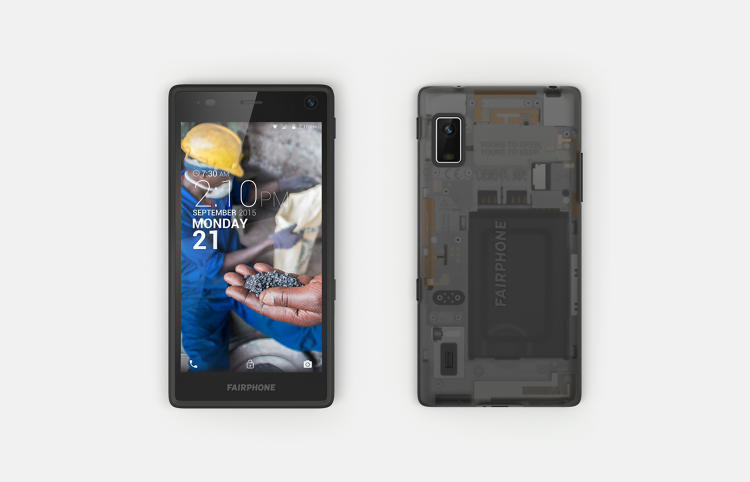
3047535-slide-s-7-this-cellphone-is-made-from-fairly-minedBas van Abel wanted a phone that worked well enough, but avoided the conflict mineral issues and harsh working practices built into mainstream devices. So two years ago, he created the Fairphone, a phone that would be adequate in its functionality but exemplary in its supply chain.

Since we last spoke to him, he seems to have succeeded. The Dutch company has sold 60,000 units and established a string of direct and traceable relationships with mineral suppliers around the world. Now it’s launching a wholly new version, one that considers not only the phone’s pre-life but its longevity and afterlife as well.

As you can imagine, building a phone from scratch isn’t easy, especially when you have ethical expectations. “We had a lot of people expecting us to kind of create world peace at the same time as making a phone,” Van Abel says. “I felt a little bipolar. Sometimes I felt like dying. At other times, I felt on top of the world.”

Read More.

Sarah Kauss launched S’well to rid the world of plastic water bottles | Money Cnn

Plastic water bottles are a divisive issue for many consumers, but not for Sarah Kauss.

The defining moment happened at Kauss’ five-year business school reunion in 2009.

“A professor did a presentation about the global water crisis and the impact on the planet from plastic waste,” said Kauss. “I knew then that my bottle idea had to happen.”

Before then, Kauss would carry other metal water bottles with her but wasn’t happy with their look.

In 2010, Kauss launched her startup S’well, a line of insulated reusable stainless steel bottles that are designed to keep drinks cold for 24 hours and hot for 12 hours.

Since then, the New York-based firm has sold 4 million bottles. The business is profitable and saw revenue surge 400% between 2013 and 2014 — hitting $10 million last year. “We expect revenue to grow exponentially again this year,” she said.

Read More.