When Christine Saunders saw her Southern California floral design company’s revenue dip last fall as the economy sputtered, she realized that creating products for do-it-yourself brides might spur sales. But the owner of The Spiraled Stem Floral Design didn’t want to carry the expense and burden of treading into this unfamiliar market alone.
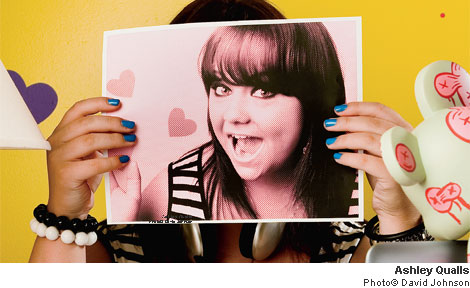
Ashley Qualls is an accidental entrepreneur. Her website, Whateverlife.com, which she set up in 2004, was created mainly as a way to share her custom MySpace.com templates with friends and family.
Fresh raw almond milk is delicious, healthy, unprocessed, and economical. There is no waste, no unrecyclable plastic-lined tetra-pak boxes or cartons to put in landfills and drink BPA out of, and this tastes much, much better than storebought.
“You need a brand makeover when the marketplace tells you so directly: Sales are slowing and market share is shrinking,” Adamson says. “But it’s often too late to change things when they are really off. You have to catch it just at the tipping point when things are going great, but the increases are diminishing and momentum is giving out.”
Reports from last month reveal that the US federal deficit had been catapulted to record territory in August, hitting $1.38 trillion with just one month left in the budget year.
It remains a concerning figure – not least because of the worries it has raised regarding the willingness of foreigners to continue purchasing Treasury debt. For that is where the debt comes from: US Treasury securities – a government debt issued by the United States Department of the Treasury, which other countries and institutions then buy.
In essence then, Treasury securities (in this case, Treasury bonds) are nothing more than glorified loans – and as the US Treasury releases data pertaining to this – it is becoming increasingly hard for the American people to get a grasp on the fact this is how their country borrows money.
If its any consolation, it should be noted that this is how all governments borrow money, so the US isn’t alone: but with America’s deficit now soaring to an incredulous height, concerns seem to not only be justified but also gaining impudence.
The effects of the credit crunch have been clear for all to see: from bank failings to government bailouts, to a full-blown economic fallout, the recession continues to hang over us – now with just spots of recovery on the horizon.
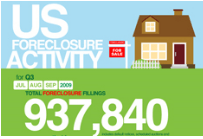
As such, the American people are now facing unprecedented levels of layoffs and cut backs, and US mortagage foreclosure filings remain near a record high. This comes despite news that foreclosure filings had actually fallen for a second straight month last month, largely thanks to ongoing government efforts to keep borrowers in their homes. But, while foreclosures in September were down four percent when compared with August, they remain up by 29 percent from the year-earlier month.
The RealtyTrac US Foreclosure Market Report, which is behind the current findings, provides a count of the total number of properties with at least one foreclosure filing reported during the month (or quarter). The data, collected from ore than 2000 counties nationwide, accounts for more than 90 percent of the US population.
As a result, for those people actually facing foreclosure filings – 343,638 in all throughout September – which include mortgage default notices, house auctions and home repossessions by banks, the problem seems both very intense and very, very real…
a “25-meter interior swimming pool, three decks and a 36-meter “beach” along the back. The large solar panels covering the roof and sides of the vessel could save at least 200 tons of diesel fuel a year.
 ders saw her Southern California floral design company’s revenue dip last fall as the economy sputtered, she realized that creating products for do-it-yourself brides might spur sales. But the owner of The Spiraled Stem Floral Design didn’t want to carry the expense and burden of treading into this unfamiliar market alone.
 Read Article
 aw almond milk is delicious, healthy, unprocessed, and economical. There is no waste, no unrecyclable plastic-lined tetra-pak boxes or cartons to put in landfills and drink BPA out of, and this tastes much, much better than storebought.
 “You need a brand makeover when the marketplace tells you so directly: Sales are slowing and market share is shrinking,” Adamson says. “But it’s often too late to change things when they are really off. You have to catch it just at the tipping point when things are going great, but the increases are diminishing and momentum is giving out.”
 The effects of the credit crunch have been clear for all to see: from bank failings to government bailouts, to a full-blown economic fallout, the recession continues to hang over us – now with just spots of recovery on the horizon.
 Dispatches From The Front