8 Recognition Apps Work Almost Like Magic|Scientific American

You’ve probably heard of some speech-recognition efforts, like Apple’s Siri and the dictation program Dragon NaturallySpeaking. But the world is teeming with apps that recognize other sights, sounds and stimuli. Here’s a taste.

Evernote (free; Android, iOS, Mac, Windows): Evernote is the popular notepad-of-all-trades app that keeps your notes synchronized across all of your gadgets. If you snap a photo of something that includes writing (or paste in such an image), even handwriting, its behind-the-scenes optical character-recognition algorithms decipher the writing as text. The accuracy isn’t quite good enough to convert the writing into typed text, but it’s good enough to let you perform searches on handwritten notes. That is, you can pull up the image of your scanned or photographed handwriting by typing a keyword into the search box.

Read More.

Scientists Adding Color to Solar Panels | GreenPacks.org

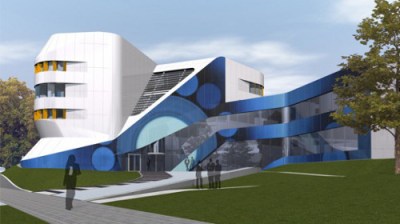
If you have noticed the design and layout of solar panels around, you would have thought a minute or two about its aesthetics. Though not too bad, the dark colored cells could be a put off. Scientists have now decided to add some color to them. Researchers at the Fraunhofer Institute of Applied Optics and Precision Engineering IOF in Germany are working on a new type of photovoltaic using thin film technology to give some color to the panels.

Read More.

First Major Kickstarter Game Runs Out Of Money | Forbes

broken arrow

Once upon a time, there was a website designed to crowdfund small, creative projects—a garage band’s new self-recorded album; a short film; a dance video. That website was called Kickstarter.

Then, along came Tim Schafer and Double Fine Adventure, the video game now known as Broken Age, which transformed the site into an indie video game crowdfunding platform overnight. Kickstarter termed it the “Blockbuster Effect.”

Well, not just a video game funding platform, but these days many of the biggest projects—from the Ouya to Star Citizen to Torment: Tides of Numenera—are video games or video game accessories. And these projects all have, at least in part, Schafer and his game to thank. Broken Age was the catalyst, the trailblazer, the portent of things to come.

And now, despite the $3.3 million the game raised on Kickstarter (and the additional $1.2 million Double Fine raised for its second Kickstarter game, Massive Chalice) Broken Age is out of money.

Read More.

Wearable Solar Clothing | CoolBusinessIdeas.com

These days, clothing is so much more than something to cover you up and keep you sheltered from the elements. Manufactures are making clothes do unbelievable things. The latest addition to this list of functional clothing is Wearable Solar, the brainchild of Gelderland Valoriseer’s Christiaan Holland, fashion designer Pauline van Dongen, and solar-panel specialist Gertjan Jongerden. Wearable Solar is a line of clothing that boasts embedded solar panels wired to allow for personal device charging; basically, it turns you into a walking talking charger! Just plug in your Smartphone and get it charged while you are on a leisurely walk through the park.

Leave a comment.

How to Teach Kids About Money | genxfinance.com

There are so many things we have to teach our children but one that is often overlooked in today’s world is teaching kids about money. Unless your child has a large trust fund in their name or some other financial windfall heading there way they will need to learn about personal finance. The earlier you start teaching children about financial matters the better.  During the most impressionable years of their lives, young people will formulate an opinion about money that will likely stick with them throughout adulthood.  With that being said, it’s important to be straightforward with kids.  They need to know the value of a dollar and you’re their best teacher.

Use everyday activities to teach lessons about money.

Take your children to the grocery store.  Teach them how to find the best deals by watching for sales, comparing prices, and using coupons.  Purchase a small calculator for your child and work on adding and subtracting while you shop.  This is especially helpful for elementary aged children who are learning to differentiate between a dollar bill and a hundred dollar bill.

Read More.

10 Ways Companies Screw Up Their Websites | AllBusiness.com

Building a website is like building a house. When built properly, they both combine interdependent components into a functional and attractive whole. In a house, the components are things like plumbing and ventilation; in a website, they’re things like search engine optimization SEO and navigational structure.Both are enormous projects with thousands of variables, and although there may be 10 right answers to every question, there are also 50 wrong answers, which may explain why so many houses and websites turn into money pits. To keep this from happening to your site, avoid these 10 common traps.

1. Imprecise or Improper PurposeWhy am I building this website? Until you answer that question with the eloquence of an orator, do not start grabbing any tools. Many firms have only a vague idea of what they want their site to do. Others ask their site to do too much, not enough, or the wrong thing altogether. Behind every great business site is a crystal clear, sensible vision.

Read More.

10 Lessons College Won’t Teach You — But Entrepreneurship Will | Entrepreneur.com

College is a step toward adulthood for many, but the transition from bachelor’s degree to entrepreneur can feel a bit jarring. Keeping your chin up, a stiff upper-lip and other empty clichés everyone says to you can’t really prepare you for one really important truth: There isn’t a curriculum for adulthood. Knowing this, here are a few changes to expect when you take your first steps away from college and into starting you own business.

1. Attendance is always mandatory.

In college, you may have ditched class or ducked out early and still managed to pass. This isn’t going to fly in the startup world.  Rain or shine, young treps need to show up and do so in a punctual fashion. Not only will it keep you in the loop of the day-to-day activities but will also set a good example for employees.

2. Scheduling isn’t set in stone.

Your Friday morning biology lab is finally over. What a relief. While you may be thanking your lucky stars you don’t have to roll out of bed after a crazy night to go and dissect a frog, don’t get too excited. Adult life and entrepreneurship means you’re beholden to a schedule of necessity rather than attendance sheets. As a young trep, you are the harbinger of your own success, meaning you sometimes will need to ask yourself to come in on a Saturday.

3. Free time isn’t free.

Just as there is no such thing as a free lunch, there is no such thing as “free time” in the world of startups. During college you may have had huge breaks between class or long holidays but startup reality is quite different. While most of your friends are working at finding a nine-to-five job and attending happy hour, you are slaving away at your business plan or putting out fires at your company. And that’s just the reality of being an entrepreneur — sacrificing free time in exchange for freedom.

via 10 Lessons College Won’t Teach You — But Entrepreneurship Will | Entrepreneur.com.

Fake It Until You Make It | Entrepreneur.com

Do you ever feel like you don’t quite deserve your success or aren’t fully qualified to do what you do? That common feeling is what psychologists call the “impostor syndrome,” a phenomenon where successful people feel like frauds waiting for someone to realize that they’re unfit for their leadership roles.

“Millions of people, from entrepreneurs to celebrities, have a hard time internalizing their accomplishments,” says Valerie Young, an expert on impostor syndrome and, author of The Secret Thoughts of Successful Women (Crown Business, 2011).

Photo Credit: Shutterstock

The impostor syndrome is especially common among people who become successful quickly or early, and among outsiders, such as women in male-dominated industries. “They explain away their success as luck or timing,” Young says. “They feel this sense of waiting for the other shoe to drop.”

That fear is stressful, and often leads people to hold back instead of pushing for bigger clients or more challenging opportunities.

Most of the people who feel like impostors are actually exceptionally capable. It’s their self-image that’s off. “Feeling like an impostor is different than being an impostor,” Young says. “Feelings aren’t facts.”

Read More.

Rebranding Helps Nudge Clothing Lines to a New Level | Apparel News.net

Last year, iconic fashion house Yves Saint Laurent renamed itself Saint Laurent Paris, and just recently, its parent company, PPR, one of fashion’s most esteemed companies, announced its own name change. It will be called Kering, according to Chief Executive and Chairman Francois-Henri Pinault.

DENISE’S NEW LOOK: Alpinestars by Denise Focil changed its name to AS by DF and debuted a more contemporary look.

The new name demonstrates growth and new focus, Pinault said. “In a few months’ time we will have completely transitioned from a holding company with an unfocused portfolio into a cohesive, integrated, international group focused on apparel and accessories,” he said.

Some veteran Los Angeles–area fashion lines are in the process of renaming, or “rebranding,” themselves, too. The process is risky, but rebranding can make the difference between sagging sales and stellar business.

Read More.

Bhutan to Go 100% Organic by 2020 – GreenPacks.org

Bhutan, the tiny remote kingdom nestling in the Himalayas, is already a largely organic nation. The kingdom however wants to do more on that front. Bhutan has now announced plans to go 100% organic.

And, when that gets done, Bhutan will become the first country in the world to follow fully organic agricultural practices. Thus it will ensure food safety and security to its population of around 700,000. They are planning to attain 100% organic in its food production by 2020.This decision by the state was announced by Bhutanese minister for agriculture and forest Pema Gyamtsho at the Delhi Sustainable Development Summit 2013 as a part of their decision to live in harmony with nature.

Read More.