Meta Ray-Ban Display glasses put a screen on your face without looking dorky | Digital Trends

Meta has finally lifted the covers from its screen-equipped AI smart glasses, the Meta Ray-Ban Display. The new smart glasses start at $799, and come with the glasses and the wrist-worn Meta Neural Band in the retail package. They will be available starting September 30 via Best Buy, LensCrafters, Sunglass Hut, Ray-Ban Stores, and Verizon stores in the US, followed by international sales next year.

What’s the big draw?

The most notable element of the new Meta glasses is the in-lens display, which allows users to see a preview of the media captured by the onboard camera, handle calls, see translated text, and interact with Meta AI. The whole experience runs standalone on the full-color, high-resolution panel that is placed on the right lens.

Read More

The Gatekeepers of Progress | The Startup Magazine

Every breakthrough carries a question mark. New, innovative technologies promise to solve problems, but they can create new ones. Lab success doesn’t always translate to clinics or factories. A prototype device that worked perfectly in controlled tests? It might fail spectacularly when real patients use it. That leads to trial delays and costly redesigns.

This isn’t pessimism talking. It’s experience.

Across surgical suites, biotech labs, and government agencies, professionals have learned something crucial. Enthusiasm alone doesn’t guarantee success. They’ve built multi-layered frameworks to separate genuine progress from expensive mistakes. These guardrails span legal, economic, corporate, technical, clinical, and security domains. They’re not barriers to innovation – they’re its most reliable partners.

When enthusiasm meets these real-world checks, you start sorting flash from substance.

Read More

13 Reasons Why AI Overviews Matter for Brand Identity | The Startup Magazine

For decades, search engines have acted as the gateway to brand discovery. Customers typed in a query, skimmed results, and decided which link to click. That model is shifting. Generative AI platforms now provide AI overviews, which are summarised responses that present curated information directly to users. For businesses, this is more than a technical change in search; AI overview branding is a profound shift in how brand identity is formed and communicated.

Being featured in an AI overview is no longer optional; it’s a cornerstone of digital visibility. Below are thirteen reasons why these overviews play such a pivotal role in shaping and safeguarding your brand identity.

Read More

US says framework for deal on future of TikTok ownership agreed with China | BBC News

The U.S. Treasury secretary has said Washington reached a “framework” deal with China on the ownership of TikTok’s American operations.

Scott Bessent said the framework was set in trade talks in Madrid to pave the way for US ownership. He added that US President Donald Trump and Chinese President Xi Jinping would “complete” the deal on Friday.

Trump said on Truth Social that the talks had “gone very well”, while China confirmed a framework agreement but said no deal would be made at the expense of Chinese companies’ interests.

A deadline is looming for the Chinese owner of TikTok to find a buyer for its American operations or face a shutdown and ban in the US.

Bessent announced the “framework” deal on the second day of negotiations between the US and China aimed at ending a trade war.

Read More

Rising US prices could widen the divide between haves and have-nots | BBC News

There’s a divide in the US economy between the haves and the have-nots. And accelerating inflation, driven in part by tariffs, could make it worse.

Government data points to the early stages of businesses passing on the costs of US President Donald Trump’s sweeping import tariffs to consumers.

Still, inflation remains well below its peak, and a debate continues over the extent to which tariffs will lead to a sustained rise in the pace of price hikes.

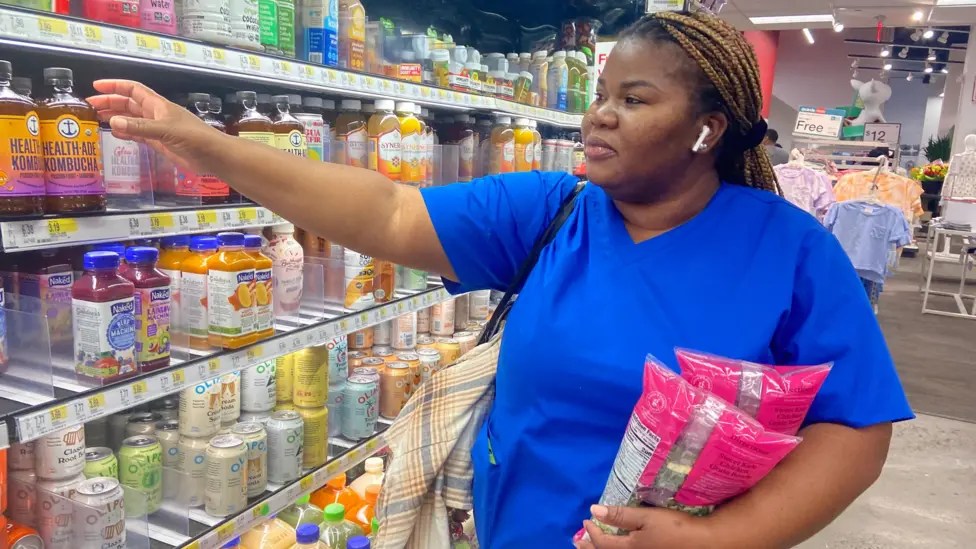
But Americans like Yanique Clarke are feeling the pinch.

Yanique, a nursing student in Manhattan who identifies as lower-income, said while shopping for groceries at a Target store this week that “prices are really drastically high” for meat, vegetables, and fruit.

“It’s quite a while now, but it’s getting higher,” she said.

Read More

California lawmakers pass AI safety bill SB 53 — but Newsom could still veto | TechCrunch

California’s state senate gave final approval early on Saturday morning to a major AI safety bill setting new transparency requirements on large companies.

As described by its author, state senator Scott Wiener, SB 53 “requires large AI labs to be transparent about their safety protocols, creates whistleblower protections for [employees] at AI labs & creates a public cloud to expand compute access (CalCompute).”

The bill now goes to California Governor Gavin Newsom to sign or veto. He has not commented publicly on SB 53, but last year, he vetoed a more expansive safety bill also authored by Wiener, while signing narrower legislation targeting issues like deepfakes.

Read More

OpenAI board chair Bret Taylor says we’re in an AI bubble (but that’s okay) | TechCrunch

OpenAI board chair Bret Taylor says we’re in an AI bubble (but that’s okay).

Bret Taylor, board chair at OpenAI and CEO of AI agent startup Sierra, was asked in a recent interview with The Verge whether he agreed with OpenAI CEO Sam Altman’s declaration that “someone is going to lose a phenomenal amount of money in AI.”

Taylor echoed Altman’s sentiments, suggesting that we are indeed in an AI bubble — but like Altman, he didn’t sound too worried about it.

Read More

Big Investors Are Betting on This ‘Unlisted’ Stock | Entrepreneur

Three of the same VC firms that backed Uber, Venmo, and eBay, respectively, are all investing in Pacaso.

Venture backing in companies like Pacaso is nothing new. After all, early-stage companies often have the potential to deliver the most outsized returns.

But recent regulatory updates have opened the door for individual investors to invest alongside these venture capitalists. Normally, everyday investors have to wait for a company to go public before they can invest, missing out on that early gain potential. Now, some companies are opening up investment opportunities to the public.

This type of investing has already seen some great success stories. For example, in 2016, 433 people invested an average of $2,730 in a private startup named Revolut. Fast-forward to today, those $2,730 stakes are worth more than $1 million, up 89,900%.

Source: Big Investors Are Betting on This ‘Unlisted’ Stock | Entrepreneur

How a Mom’s Garage Side Hustle Hit $1 Billion Revenue | Entrepreneur

What was your day job or primary occupation when you started your side hustle?

I had just stepped away from seven years at eBay Inc., where I had launched PayPal Mobile and led the eBay fashion business. I was working on a new fashion-related startup idea before I ended up starting KiwiCo in 2011.

Where did you find the inspiration for the side hustle?

When my kids were younger, I tried to find ways for them to exercise their creativity and put their problem-solving skills to work. I wanted them to grow up to feel like they could envision and better the world around them. As an engineer by training, I saw creating and building through hands-on activities as a way to explore, discover, and build creative confidence. At the same time, I was drawing on my own childhood — I have such fond memories of making and building things with my mom while I was growing up.

Read More